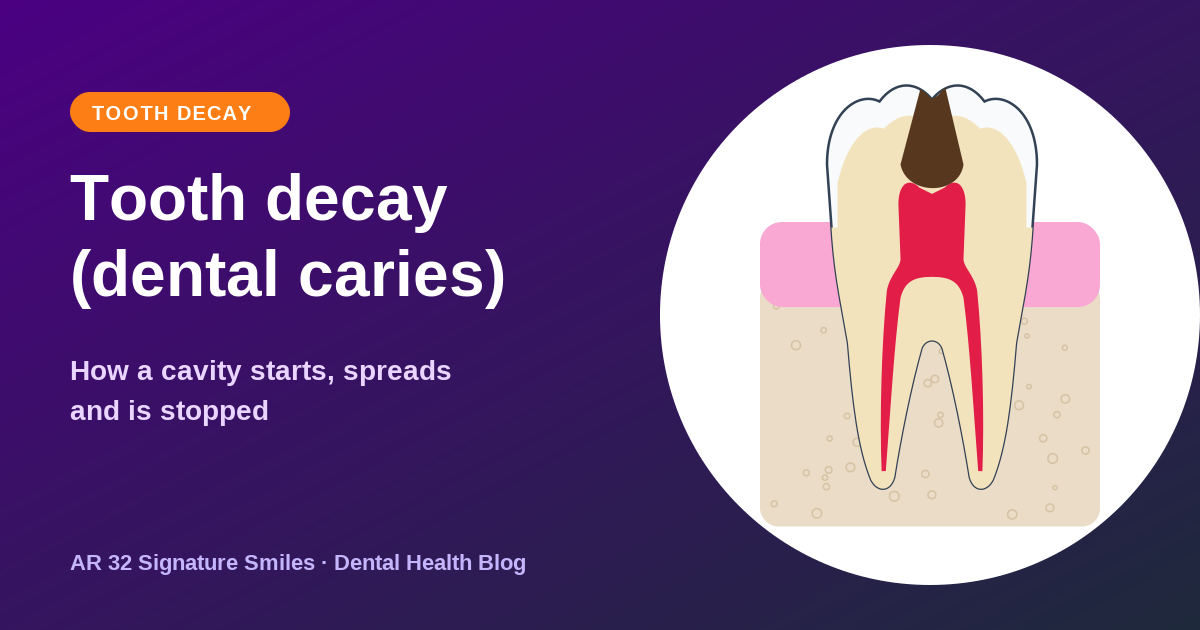
Why teeth hurt with cold, sweet or air, whether it means decay, and what stops it. Answered by our registered dental surgeons.
Answered by Dr Avinash Bamane (A-18814) and Dr Rashmi Bamane (A-22726),
Maharashtra State Dental Council. General information, not a diagnosis — nothing here
replaces looking in your mouth.
Full answer · 562 words
why are my teeth sensitive to cold
Teeth hurt with cold when dentine, the softer layer under the enamel, is exposed. Dentine is full of tiny fluid-filled tubes that lead to the nerve, and cold makes that fluid shift, so the nerve fires a sharp zing. Worn enamel, receding gums, a cavity or a crack are the usual causes. If the pain lingers after the cold is gone, get the tooth checked.
Answered by Dr Akshay Sakhare, MDS (Endodontics) · Approved by Dr Avinash Bamane (A-18814) · Last reviewed 23 October 2026
Full answer · 491 words
is tooth sensitivity a sign of decay
Sometimes, but not always. Sensitivity can come from decay, but it is just as often caused by worn enamel, receding gums, a crack or recent dental work. Sensitivity to sweets, or pain that stays in one tooth, points more towards decay. Only an examination, usually with a small X-ray, can confirm whether a cavity is there.
Answered by Dr Ashish Hedgire, MDS (Endodontics) · Approved by Dr Avinash Bamane (A-18814) · Last reviewed 23 October 2026
Full answer · 468 words
does sensitive toothpaste actually work
Yes, for the common kind of sensitivity caused by exposed dentine, a desensitising toothpaste does help most people, but it takes two to four weeks of twice-daily use. It does not fix a cavity, a crack or a leaking filling; it only dulls the warning. If there is no clear improvement after a month, see a dentist.
Answered by Dr Indrajeet Baad, MDS (Endodontics) · Approved by Dr Rashmi Bamane (A-22726) · Last reviewed 23 October 2026
Full answer · 521 words
why did my teeth become sensitive suddenly
Sensitivity that appears suddenly usually has a recent cause: a new crack from biting something hard, a filling that has chipped or come loose, a cavity that has just reached the dentine, recent cleaning or whitening, or night-time grinding. A blocked sinus can also make upper back teeth ache. Sudden sensitivity in one tooth deserves a prompt check.
Answered by Dr Jain Paresh, MDS (Endodontics) · Approved by Dr Avinash Bamane (A-18814) · Last reviewed 23 October 2026
Full answer · 487 words
why are my teeth sensitive after whitening
Whitening gels contain peroxide, which passes through enamel into the dentine and briefly irritates the nerve. This sensitivity is common, usually temporary and normally settles within a few days of stopping. It is worse with strong gels, long applications, or teeth that already have recession, cracks or leaking fillings. Sensitivity lasting more than a week needs a check.
Answered by Dr Kunal Bonde, MDS (Endodontics) · Approved by Dr Avinash Bamane (A-18814) · Last reviewed 23 October 2026
Full answer · 473 words
can receding gums cause sensitivity
Yes, receding gums are one of the most common causes of sensitivity. When the gum pulls back, it exposes the root, which has no enamel and only a thin covering that wears away easily, leaving dentine open to cold and touch. Treating the cause of the recession, usually gum disease or hard brushing, matters as much as treating the sensitivity.
Answered by Dr Nachiket Shah, MDS (Periodontics) · Approved by Dr Rashmi Bamane (A-22726) · Last reviewed 23 October 2026
Full answer · 512 words
is sensitivity after a filling normal
Some sensitivity after a filling is normal, especially for deep fillings, and usually fades over a few days to a few weeks. Pain when biting usually means the filling is slightly high and needs a quick adjustment. Pain that throbs, lingers after cold, wakes you at night or gets worse means the nerve may be inflamed and should be checked.
Answered by Dr Nikhil Nagari, MDS (Endodontics) · Approved by Dr Avinash Bamane (A-18814) · Last reviewed 23 October 2026
Full answer · 556 words
when is tooth sensitivity a reason to see a dentist
See a dentist if sensitivity is in one tooth, lingers after the trigger, comes on by itself, wakes you at night, hurts when you bite, follows an injury, or has not improved after a month of desensitising toothpaste. Swelling, a bad taste or a visible hole also need a visit. Facial swelling with fever or difficulty swallowing needs urgent care.
Answered by Dr Shailendra Supekar, MDS (Endodontics) · Approved by Dr Rashmi Bamane (A-22726) · Last reviewed 23 October 2026
why do sweet things hurt my teeth
Pain from sweets usually means sugar is reaching dentine through an opening in the enamel, most often a cavity, a leaking or cracked filling, or a worn area near the gumline. Sugar draws fluid out of dentine's tiny tubes and the nerve reacts. Sweet sensitivity in one spot is a common early sign of decay, so it is worth getting checked.
A sharp twinge when you eat mithai, chocolate or a sweet chai is a more specific signal than cold sensitivity. Cold can trouble a tooth with a little exposed dentine anywhere, but sugar usually needs a direct opening into the tooth to cause pain.
Why sugar hurts
Dentine, the layer under enamel, is full of microscopic tubes of fluid that lead to the nerve. A concentrated sugar solution pulls fluid out of those tubes, and the nerve senses the movement as a quick, sharp pain. Intact enamel blocks this. So when sweets hurt, something has breached the enamel.
The likely culprits
A cavity, often between teeth where you cannot see it.
An old filling with a gap at its edge, where decay can start again underneath.
Exposed root surfaces from gum recession or brushing notches.
A crack that lets sugar seep in.
If the pain is in one spot and goes away once you rinse, it is still worth a look: early decay is easy to fill, and waiting lets it grow towards the nerve. Rinse with water after sweets, and keep sugary snacks to mealtimes rather than sipping sweet drinks all day. See cavities and tooth decay for how decay progresses.
Answered by Dr Anand Agrawal, MDS (Endodontics) · Approved by Dr Rashmi Bamane (A-22726) · Last reviewed 23 October 2026
can brushing too hard cause sensitivity
Yes. Scrubbing hard, especially with a medium or hard brush and sideways strokes, wears away enamel and pushes gums back, exposing sensitive root surfaces. Over years it can carve small V-shaped notches near the gumline. Switching to a soft brush, gentle circular strokes and a light grip stops further damage; existing notches may need a filling.
Many people believe a harder scrub means cleaner teeth. It does not. Plaque is soft and comes off with gentle brushing; extra force only damages the tooth and gum.
What over-brushing does
Gum recession: repeated pressure pushes the gum away from the tooth, exposing the root, which has only a thin covering.
Toothbrush abrasion: sawing sideways at the gumline wears notches into the tooth's neck, opening the sensitive dentine underneath. Dentists see this most on the canines and premolars on the side opposite your brushing hand.
Abrasive whitening or charcoal powders, tooth powders and brushing straight after acidic drinks make the wear faster. Read more on our tooth abrasion page.
Signs you may be brushing too hard
Bristles splay out within a few weeks.
Gums look pulled back, or teeth look longer than they used to.
You can feel a groove near the gumline with your fingernail.
What to change
Use a soft-bristled brush, hold it with your fingertips like a pen, and use small gentle circles for two minutes. An electric brush with a pressure warning can help habitual scrubbers. Recession and notches do not grow back, so if sensitivity continues your dentist may cover the notch with a tooth-coloured filling or advise on gum recession.
Answered by Dr Kiran Maske, MDS (Endodontics) · Approved by Dr Rashmi Bamane (A-22726) · Last reviewed 23 October 2026
how long does tooth sensitivity last
It depends on the cause. Sensitivity after cleaning or whitening usually fades within days, and after a filling within a few days to a few weeks. Sensitivity from exposed dentine can come and go for months unless treated, and sensitivity from a cavity or crack will not go away by itself. Pain lasting more than two weeks needs a check.
There are two different questions hidden here: how long does each episode of pain last, and how many days or weeks will the problem go on. Both are useful clues.
How long each zing lasts
Typical sensitivity from exposed dentine is a sharp pain that disappears within a few seconds of the cold or sweet being removed. If the ache lingers for half a minute or more, or throbs on its own, the nerve inside the tooth is likely inflamed and the tooth should be examined soon.
How long the problem goes on
After scaling: a few days to about two weeks, as the cleaned root surfaces settle.
After whitening: usually a day or two to a few days after stopping.
After a filling: a few days for small fillings, up to two to four weeks for deep ones.
Exposed dentine from recession, erosion or over-brushing: it comes and goes until the cause is dealt with. A desensitising toothpaste takes two to four weeks to show its full effect.
A cavity, crack or broken filling: it will not heal and usually worsens.
As a rule of thumb, sensitivity that is getting steadily better is reassuring, and sensitivity that is getting worse or has lasted more than two weeks without a clear reason deserves a visit. See our tooth sensitivity page for causes.
Answered by Dr Mrunal Godse, MDS (Endodontics) · Approved by Dr Rashmi Bamane (A-22726) · Last reviewed 23 October 2026
can acidic food and drinks cause sensitivity
Yes. Acids in citrus, nimbu pani, cola, energy drinks, sour pickles and vinegar soften enamel, and repeated exposure wears it away, a process called erosion. Acid reflux and frequent vomiting do the same from inside. As enamel thins, dentine is exposed and teeth become sensitive. How often you have acidic things matters more than how much.
Enamel is the hardest substance in the body, but acid dissolves it. Each acidic sip softens the surface for a while; saliva then slowly repairs it. When the acid comes too often, the repair cannot keep up and enamel is gradually lost. This is erosion, and it is different from decay because no bacteria are involved.
Common sources in everyday life
Nimbu pani, lemon water first thing in the morning, kokum and other sour sherbets.
Cola, soda, energy drinks and many packaged juices, including "diet" versions.
Citrus fruit, raw mango, tamarind, sour pickles and vinegar.
Acid reflux and heartburn, which bring stomach acid into the mouth, often at night. See erosion from acid reflux.
Habits that protect your teeth
Have acidic drinks with meals rather than sipping them through the day.
Use a straw for cold drinks and do not swish them around your mouth.
Rinse with plain water afterwards.
Wait about 30 to 60 minutes before brushing, so you do not scrub softened enamel.
Use a fluoride or desensitising toothpaste and a soft brush.
Lost enamel does not grow back. If your teeth look thinner, more yellow or more see-through at the edges, read about tooth erosion and ask your dentist to check how far it has gone.
Answered by Dr Shikha Gandhi, MDS (Endodontics) · Approved by Dr Avinash Bamane (A-18814) · Last reviewed 23 October 2026
Read the full guide
Complete articles from our dental health blog, written by our MDS panel.
A question answered online is general. An examination is specific to your tooth.
Kharadi runs late, and reception will tell you honestly if you do not need to come in yet.