AR 32 Signature Smiles / Patient guide / The dental care cycle
The dental care cycle · 5 clinical stages
The dental care cycle: what happens to your teeth, stage by stage
Good dental health is not one appointment. It is a cycle that repeats for life: you notice, a check-up confirms,
a diagnosis explains, the right treatment fixes, and maintenance keeps it fixed. Catching a problem early in the cycle
is what keeps treatment small, quick and affordable.
- 1 Awareness
- 2 Screening
- 3 Diagnosis
- 4 Treatment
- 5 Maintenance
Each stage below says what it is, what you can do, and where AR 32 helps. Four of them have a longer page of their own.

1Awareness: knowing what to look for
Most dental problems start without pain. Early decay is a chalky white or brown spot; early gum disease is gums that bleed when you brush. Knowing these signs, and how often sugar reaches your teeth through the day, decides whether a problem is found as a small filling or as a root canal.

2Screening: the check-up that finds it first
A routine examination looks at every surface of every tooth, the gums and the soft tissues of the mouth. It catches decay between teeth, worn fillings and early gum disease before you can feel them, and it is where a professional clean removes the tartar a brush cannot.
3Diagnosis: finding the real cause
The same toothache can come from decay, a cracked tooth, the gums, a sinus or a clenching habit. A diagnosis joins the history, the examination and, where needed, an X-ray, so that the treatment fixes the cause and not only the pain. A specialist opinion is added when the case needs one.

4Treatment: choosing the right option for you
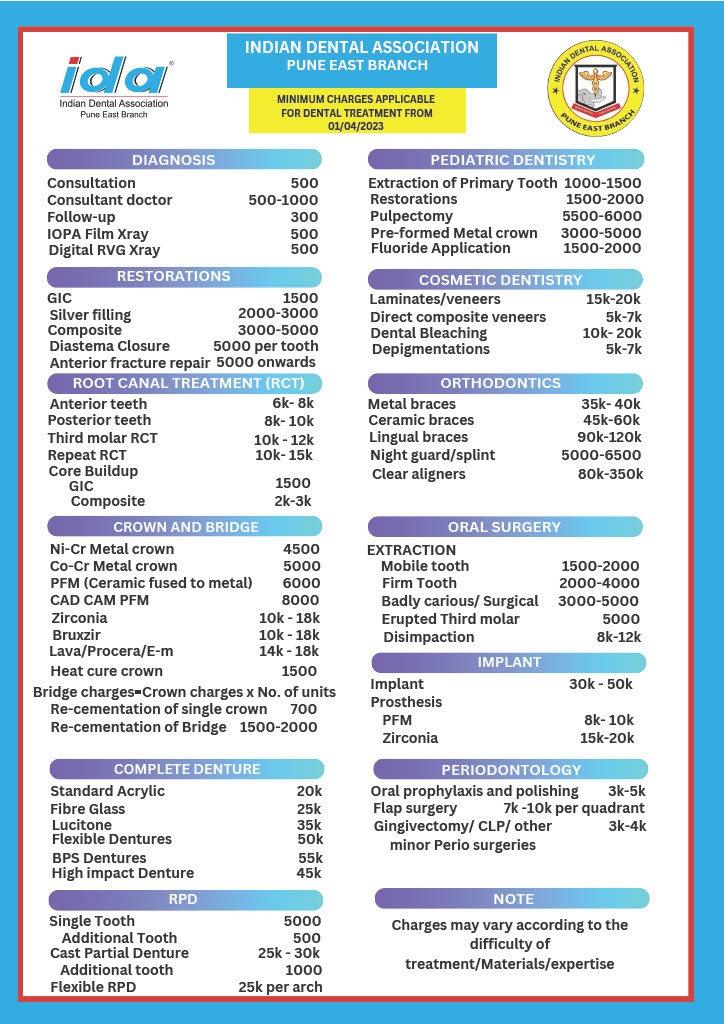
Most problems have more than one correct treatment. A broken tooth may take a filling, an onlay or a crown; a missing tooth a bridge, a denture or an implant. The choice depends on the tooth, your health, how long it must last and the cost. You see every option, with its price, before anything starts.

5Maintenance: keeping the result for years
A filling, crown or implant is only as good as the care around it. Brushing and cleaning between teeth, a check-up and clean on a regular recall, and dealing early with any change keep treated teeth working. Then the cycle starts again, at stage 2, rather than at a new emergency.
Why the stage matters
- Decay found in the enamel is usually a small filling. The same decay found once it reaches the nerve is a root canal and a crown.
- Bleeding gums treated early often need only a clean and better home care. Left alone, the bone around the teeth is lost.
- A treated tooth that is checked regularly lasts. One that is only seen when it hurts again often needs the treatment repeated.
Want the practical steps instead? This page is the clinical side of dental care. How to get that care with
AR 32 - emergency help, prices, the doctors, booking, registering and your records - is a separate guide:
Your AR 32 roadmap.
AR 32 Signature Smiles · Patient guide · Published 9 November 2026. General information, not a diagnosis:
see a dentist about your own teeth.