Periodontal Flap Surgery Basics - the stages step by step

Periodontal Flap Surgery Basics

Periodontal flap surgery is a gum operation used to treat deep pockets caused by periodontitis that have not healed after deep cleaning. The gum is gently lifted away from the teeth so that the root surfaces and the bone can be seen and cleaned directly, then the gum is stitched back in a position that is easier to keep clean.

It is carried out by a periodontist or a trained dentist under local anaesthesia, usually one area of the mouth at a time. Where bone has been lost in favourable patterns, regenerative materials can be placed at the same time to rebuild some of the lost support.

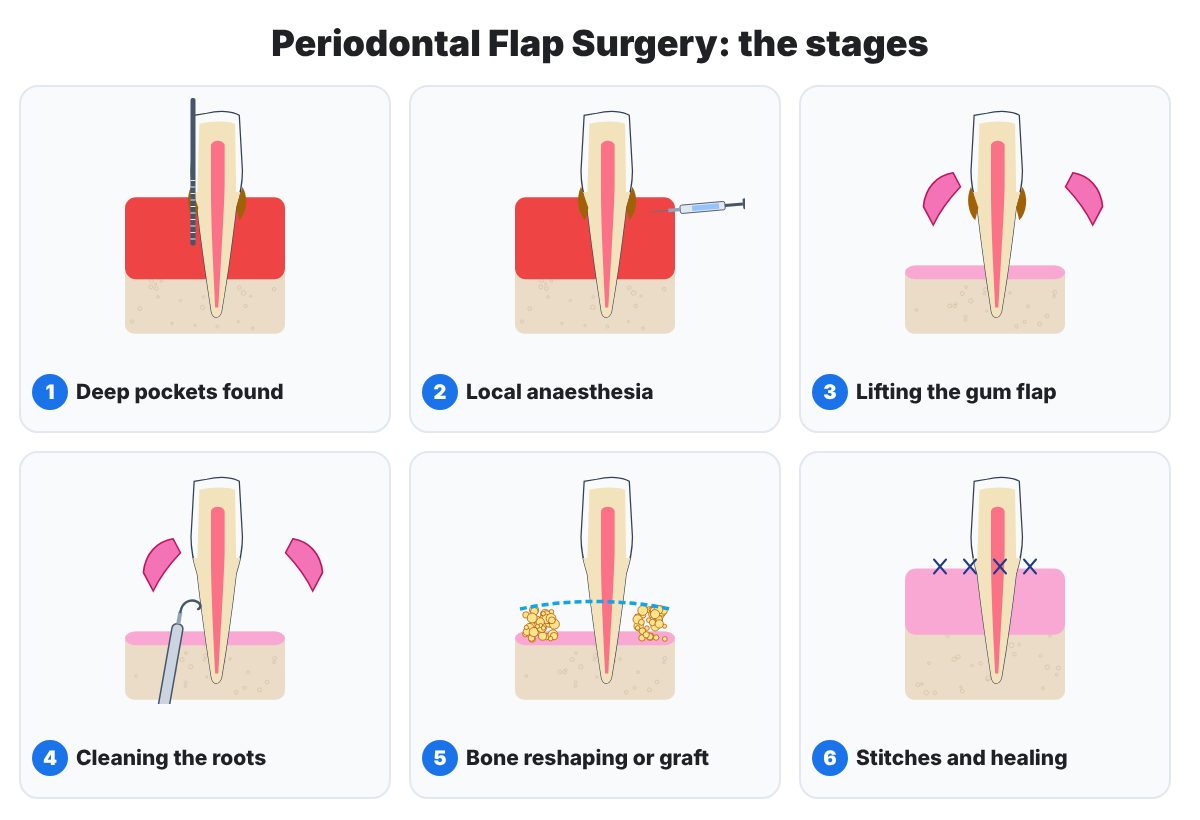
The 9 Steps of Periodontal Flap Surgery

Why do I need gum surgery after deep cleaning?

Pockets are re-measured two to three months after scaling and root planing. Pockets that remain deep and bleeding, usually 5 to 6 mm or more, cannot be cleaned reliably from outside and are considered for surgery.

Is flap surgery safe if I take medicines?

Your medical history, medicines - particularly blood thinners - and diabetes control are reviewed. Smoking greatly reduces healing and should be stopped. Oral hygiene must be good before surgery.

Is gum surgery painful?

The area is fully numbed with local anaesthesia, so the operation is not painful. Afterwards, discomfort is usually managed with simple painkillers.

How is the gum opened?

Fine incisions are made around the necks of the teeth and, if needed, a little way along the gum, preserving as much healthy tissue as possible.

What does lifting the gum flap achieve?

The gum is gently lifted from the bone as a flap, exposing the roots and the bone around them so that the surgeon can see the extent of the disease directly.

What is done once the roots are exposed?

Calculus and infected tissue are removed from the root surfaces and from the bone defects under direct vision, something that is not possible through a deep pocket.

Can lost bone be rebuilt during flap surgery?

Irregular bone may be reshaped so that the gum can heal snugly. In suitable defects, bone graft material, membranes or other regenerative materials are placed to encourage new bone and attachment to form.

Will I have stitches after gum surgery?

The flap is repositioned and secured with fine stitches; a protective periodontal dressing may be placed. Stitches are removed after about one to two weeks.

What is recovery like after flap surgery?

Mild swelling and discomfort for a few days are normal. Use the prescribed mouthwash, avoid brushing the operated area until advised, eat soft food and do not smoke. Lifelong periodontal maintenance every three to four months protects the result.
Visualizing the Clinical Procedure

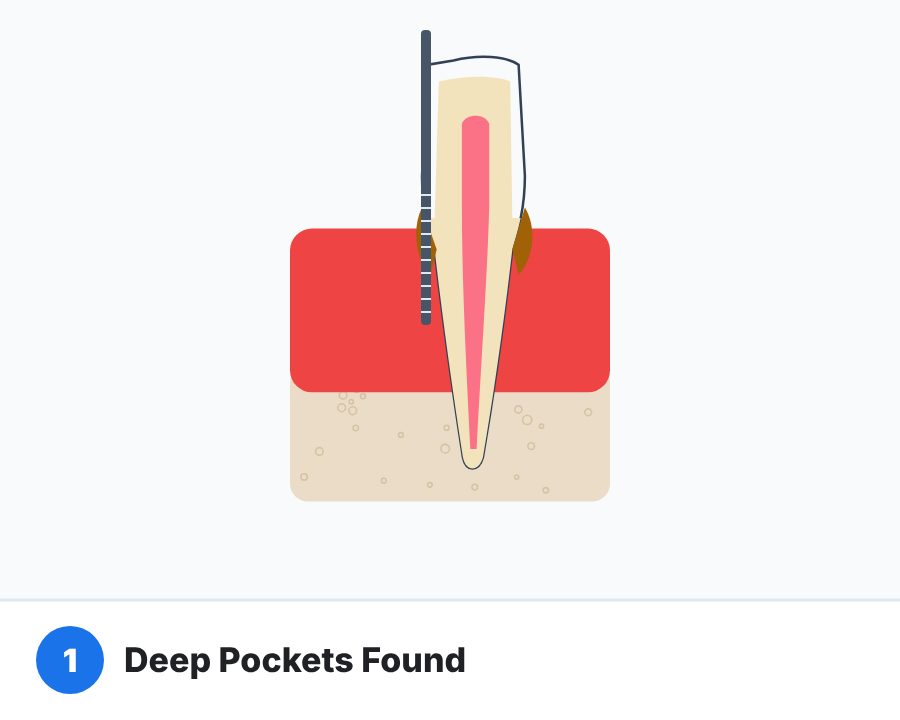
Deep Pockets Found

1. Deep Pockets Found

Periodontitis destroys the attachment between gum, tooth and bone, creating pockets in which bacteria and calculus collect. After deep cleaning, most shallow and moderate pockets heal.

Pockets that remain deep and bleed on probing at re-evaluation indicate disease the toothbrush - and the deep cleaning - cannot reach. These are the sites where flap surgery helps.

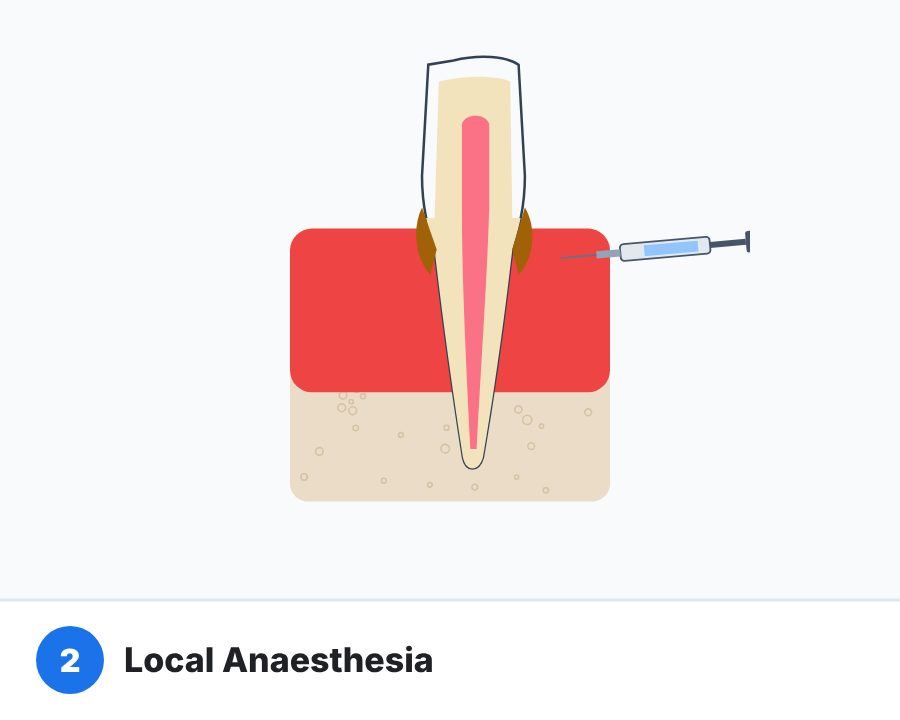
2. Local Anaesthesia

The operation is done under local anaesthesia, which numbs the teeth, gum and bone in the area being treated. You remain awake and comfortable throughout.

Usually one quadrant or sextant of the mouth is treated per visit, so that the rest of the mouth can be used normally while it heals.

Local Anaesthesia
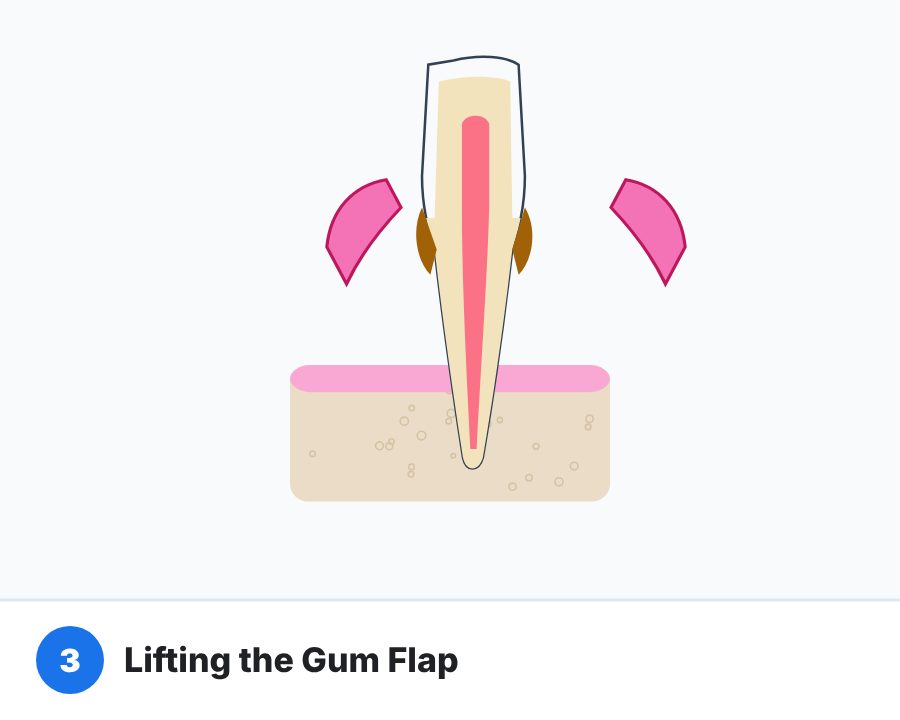
Lifting the Gum Flap

3. Lifting the Gum Flap

After careful incisions around the necks of the teeth, the gum is lifted from the bone as a flap. This opens a direct view of the roots and the shape of the bone loss.

Seeing the defect directly allows the surgeon to clean surfaces and bony craters that could never be reached blindly through a deep pocket.

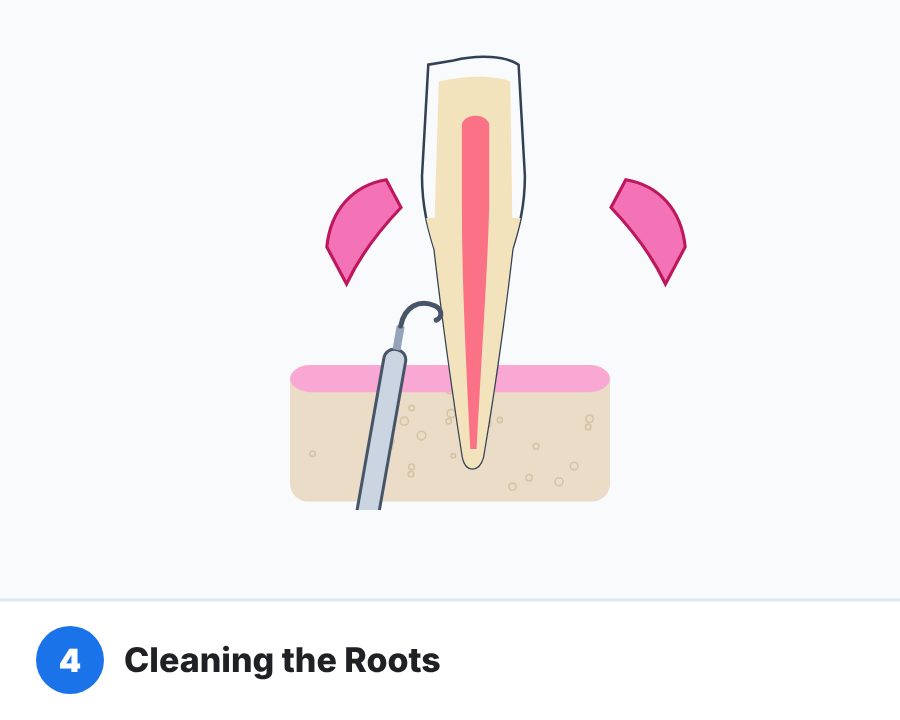
4. Cleaning the Roots

Calculus, bacterial deposits and inflamed tissue are removed from every root surface and bony defect using hand and ultrasonic instruments, under direct vision.

A thoroughly clean root is the essential condition for healing. Without it, no graft or membrane can succeed.

Cleaning the Roots
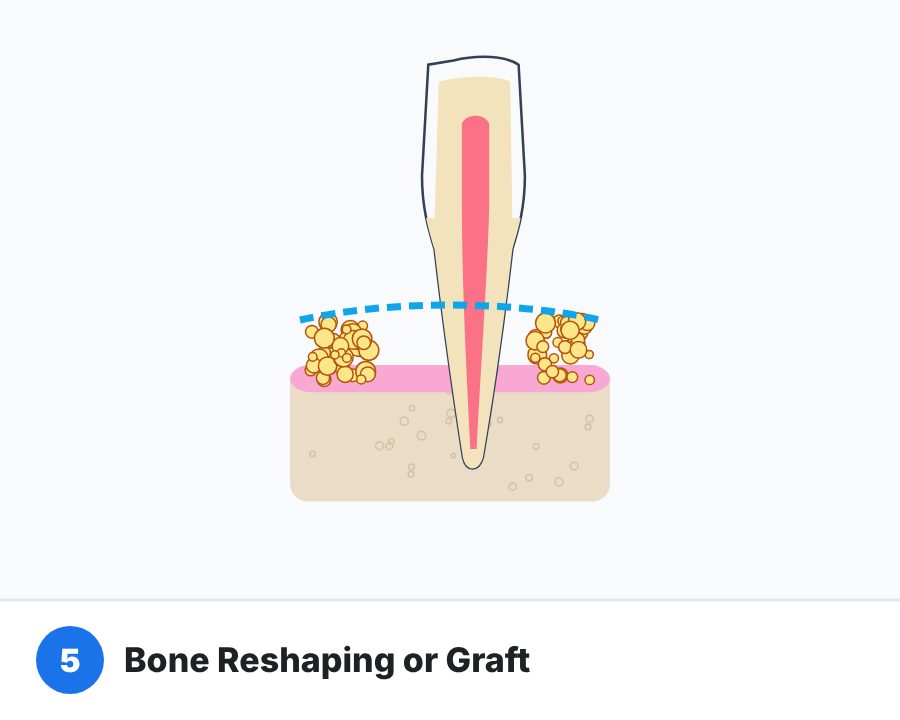
Bone Reshaping or Graft

5. Bone Reshaping or Graft

Where the bone has been resorbed unevenly, it may be gently reshaped so that the gum can heal tightly against it. In deep, contained defects, bone graft particles and a protective membrane may be placed to regenerate lost support.

Regeneration is possible only in particular defect shapes; your periodontist decides what is suitable during the operation.

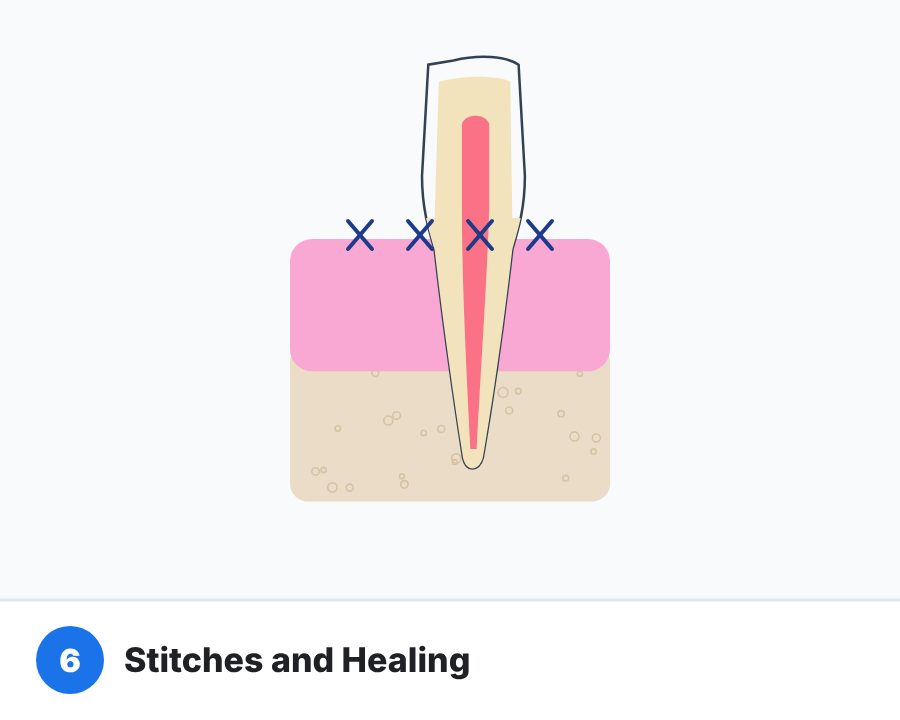
6. Stitches and Healing

The gum flap is replaced and held with fine stitches, often positioned slightly lower so that the remaining pockets are shallow enough to clean. A protective dressing may cover the area.

Healing takes a few weeks. The teeth may look slightly longer as the gum settles - a sign of reduced pockets. Regular maintenance cleaning keeps the disease under control long term.

Stitches and Healing