why are my teeth sensitive to cold
Teeth hurt with cold when dentine, the softer layer under the enamel, is exposed. Dentine is full of tiny fluid-filled tubes that lead to the nerve, and cold makes that fluid shift, so the nerve fires a sharp zing. Worn enamel, receding gums, a cavity or a crack are the usual causes. If the pain lingers after the cold is gone, get the tooth checked.
That sudden jolt when you sip chilled water or bite into ice cream is one of the most common complaints we hear in the chair. It feels dramatic, but in most people the cause is simple: the protective outer layer of the tooth is no longer fully covering the sensitive layer underneath. The useful part is working out why it got uncovered, because that decides whether a toothpaste is enough or the tooth needs treatment.
What is happening inside the tooth
A tooth has three layers. Enamel on the outside is hard and has no feeling. Under it is dentine, which is softer and is threaded with thousands of microscopic tubes filled with fluid. At the centre is the pulp (the nerve and blood supply inside the tooth). When enamel wears thin, or gums pull back and expose the root, those tubes open to the mouth. Cold causes the fluid inside them to move suddenly, and nerve endings at the inner end of each tube read that movement as pain. Dentists call this dentine hypersensitivity. Cold is the strongest trigger because it makes the fluid shift fastest, which is why a cold drink hurts more than a hot one for most people.
The usual reasons dentine gets exposed
- Gum recession: the root surface has only a thin covering, and it wears through quickly once the gum moves back.
- Brushing too hard: a hard brush and sideways scrubbing can carve small notches near the gumline.
- Acid erosion: frequent nimbu pani, cola, citrus fruit or acid reflux softens enamel.
- Grinding or clenching: often stress-related and often at night, it flattens and chips the biting surfaces.
- A cavity or a leaking old filling: decay opens a direct path into dentine.
- A crack: biting on supari, a bone or ice can leave a fine crack you cannot see.
- Recent dental work: cleaning, a filling or whitening can leave teeth sensitive for a while.
A short zing or a lingering ache?
This is the single most useful thing you can notice before you see a dentist. A sharp pain that fades within a few seconds of the cold being removed usually means exposed dentine with a healthy nerve. Pain that keeps aching for half a minute or longer, or that starts on its own without any trigger, suggests the pulp itself is inflamed. That is more likely with deep decay or a crack, and it can progress to needing root canal treatment if it is left. Sensitivity in one particular tooth also points more towards a local problem than sensitivity spread across many teeth.
What helps, and what your dentist can do
For mild, generalised sensitivity, a desensitising toothpaste used twice daily for two to four weeks often helps. Switch to a soft brush, brush gently, and avoid brushing straight after acidic food or drinks. If the cause is a cavity, a worn notch or a leaking filling, toothpaste only masks it; the tooth needs a filling or another repair. Your dentist can also paint on fluoride varnish or a bonding agent to seal the open tubes. For a tooth where the nerve is involved, the specialists in our endodontics department may be brought in.
Read more about the condition on our dentine hypersensitivity page. If one tooth keeps bothering you, or the pain lingers, it is worth an examination; you can book a consultation online.
Want this looked at properly?
Kharadi runs late. Reception will tell you honestly whether you need an appointment yet.
Book — Rs 500 ☎ 8484990678Related questions
Read the full guide
Complete articles from our dental health blog, written by our MDS panel.
 Teeth: anatomy and scienceTooth anatomy5 min read
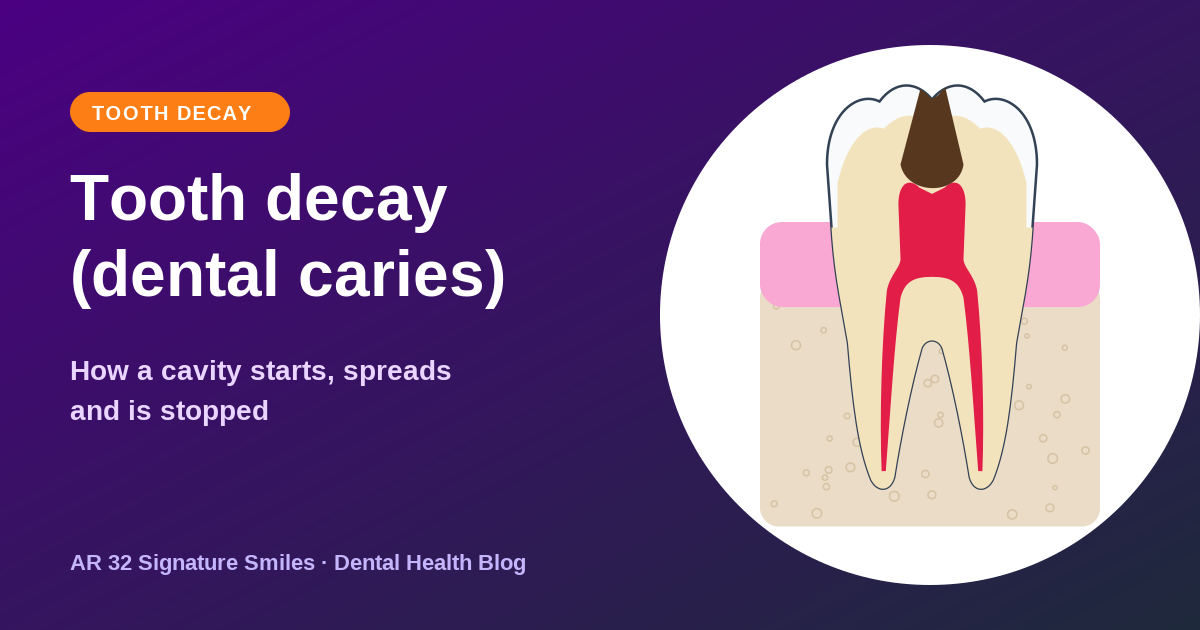 Tooth decay and fillingsTooth decay (dental caries)12 min read
 Oral health and general healthDiabetes and oral health5 min read