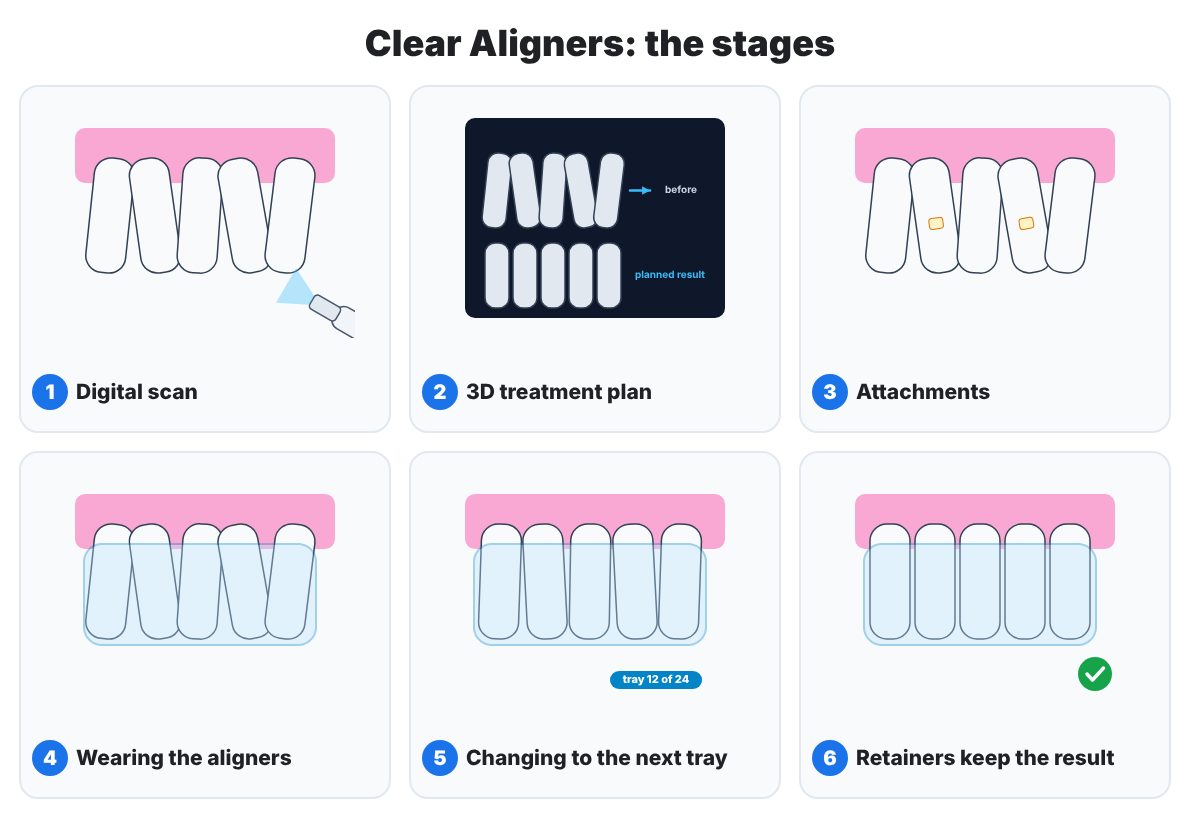
Clear Aligners Basics - the stages step by step

Clear Aligner Basics

Clear aligners straighten teeth using a series of thin, transparent, removable trays, each made to move the teeth a small step further. They are nearly invisible, and they come out for eating and cleaning.

Aligners work for many mild to moderate problems - crowding, spacing and some bite corrections. They depend entirely on being worn: about 20 to 22 hours a day, every day, changed on schedule.

The 9 Steps of Clear Aligner Treatment

Are clear aligners suitable for me?

The orthodontist examines the teeth, gums and bite and decides whether aligners can achieve the result you want, or whether fixed braces would be more predictable. Decay and gum problems are treated first.

Are messy impressions needed for aligners?

An intraoral scanner takes a 3D digital model of the teeth in a few minutes. Photographs and X-rays complete the records.

Can I see the result before starting?

The movements of every tooth are planned on the computer, stage by stage, and you can see a simulation of the expected result. The plan sets the number of aligners and the treatment time.

What are the small bumps on my teeth?

Small tooth-coloured composite shapes called attachments are bonded to some teeth. They give the aligners grip to make movements such as rotation and root control.

Will my teeth be filed?

In some plans a very small amount of enamel is polished from between certain teeth to create space. The amount is within the thickness of enamel and is planned precisely.

How many hours a day do aligners need to be worn?

Aligners should be worn for 20 to 22 hours every day and removed only for eating, drinking anything other than water, and cleaning. Brush before putting them back in.

How often are aligners changed?

Each set is usually worn for one to two weeks before moving to the next. Check-ups every six to ten weeks confirm that the teeth are tracking the plan.

What if teeth do not move exactly as planned?

A new scan is taken and additional refinement aligners are made to fine-tune the result. This is a normal part of many aligner treatments.

Do I need a retainer after aligners?

Yes. Retainers - clear removable retainers, a fixed wire, or both - hold the teeth in their new positions and are worn as instructed, usually at night in the long term.
Visualizing the Clinical Procedure

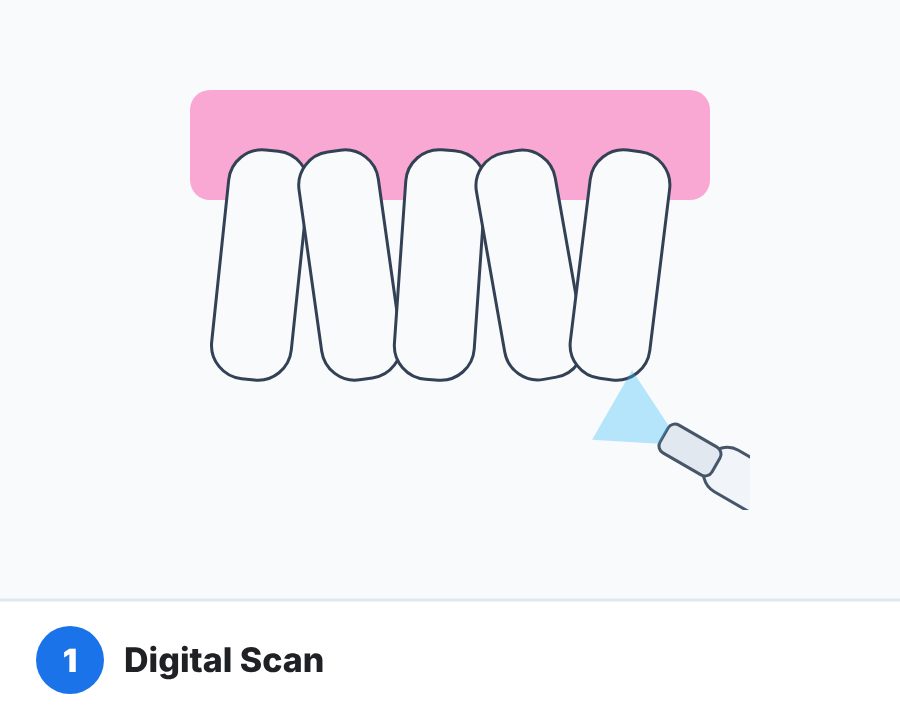
Digital Scan

1. Digital Scan

Treatment starts with a precise 3D scan of the teeth using an intraoral scanner. A small wand is moved over the teeth and builds a digital model in a few minutes, with no impression material.

The scan, together with photographs and X-rays, is used to diagnose the problem and design the treatment.

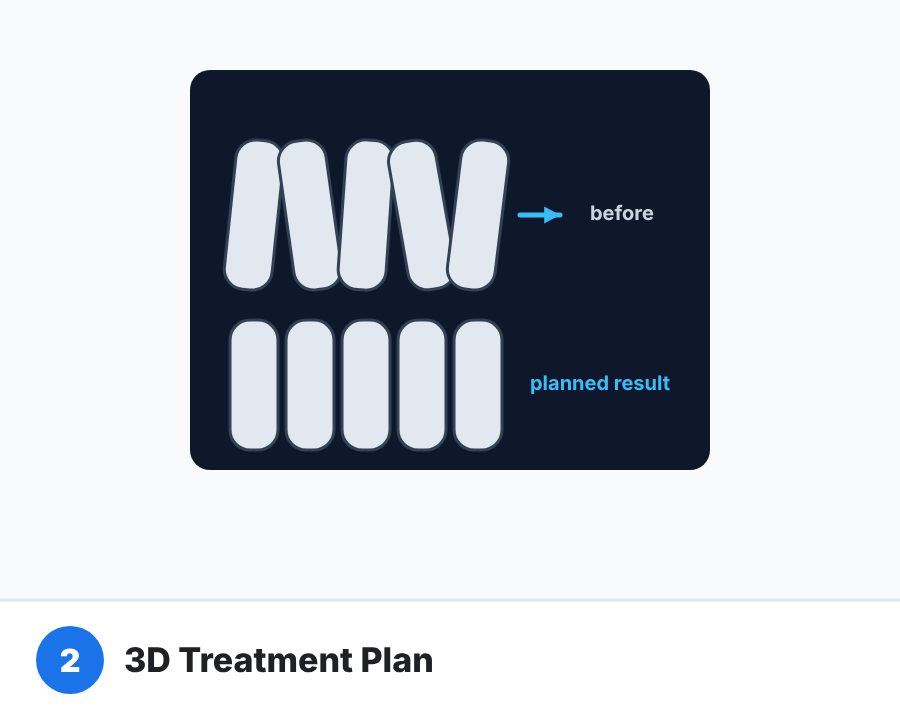
2. 3D Treatment Plan

Every tooth movement is planned on screen, step by step, from the starting position to the final result. The plan shows how many aligners are needed and lets you see the expected outcome before treatment begins.

The orthodontist checks and adjusts the plan so that movements are biologically realistic and the bite works well at the end.

3D Treatment Plan
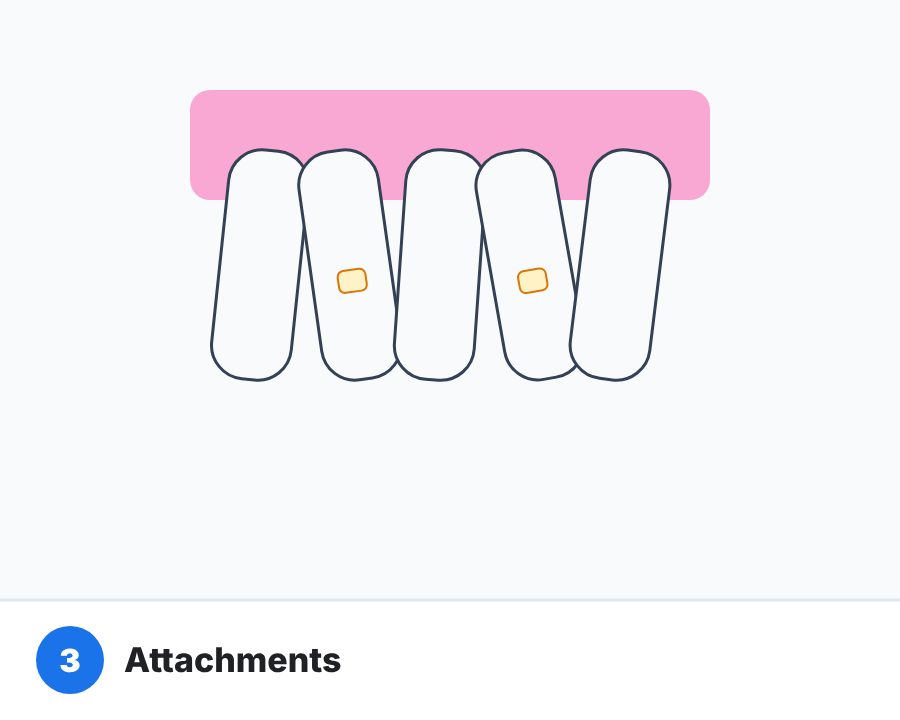
Attachments

3. Attachments

Small, tooth-coloured bumps of composite resin are bonded to selected teeth. They act as handles that the aligner can push against, allowing movements a smooth tray could not achieve, such as rotations and moving roots.

Attachments are barely visible and are polished off at the end of treatment.

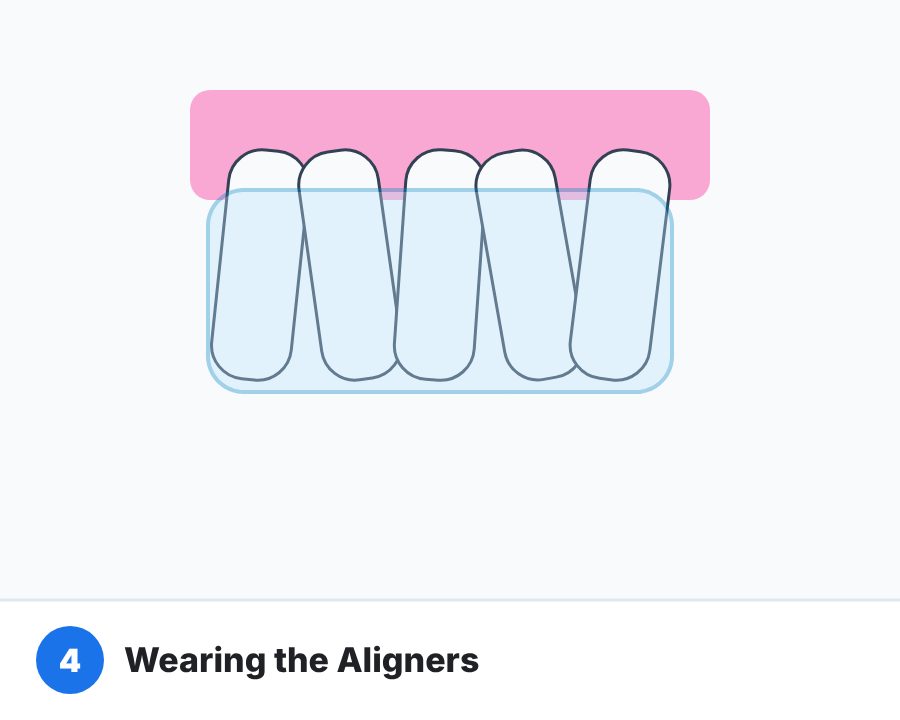
4. Wearing the Aligners

The aligners fit snugly over the teeth and apply gentle, controlled pressure. Each new set feels tight for a day or two, a sign that it is working.

They must be worn 20 to 22 hours a day. Remove them to eat and drink anything other than plain water, and brush before putting them back to avoid trapping food and sugar against the teeth.

Wearing the Aligners
Changing to the Next Tray

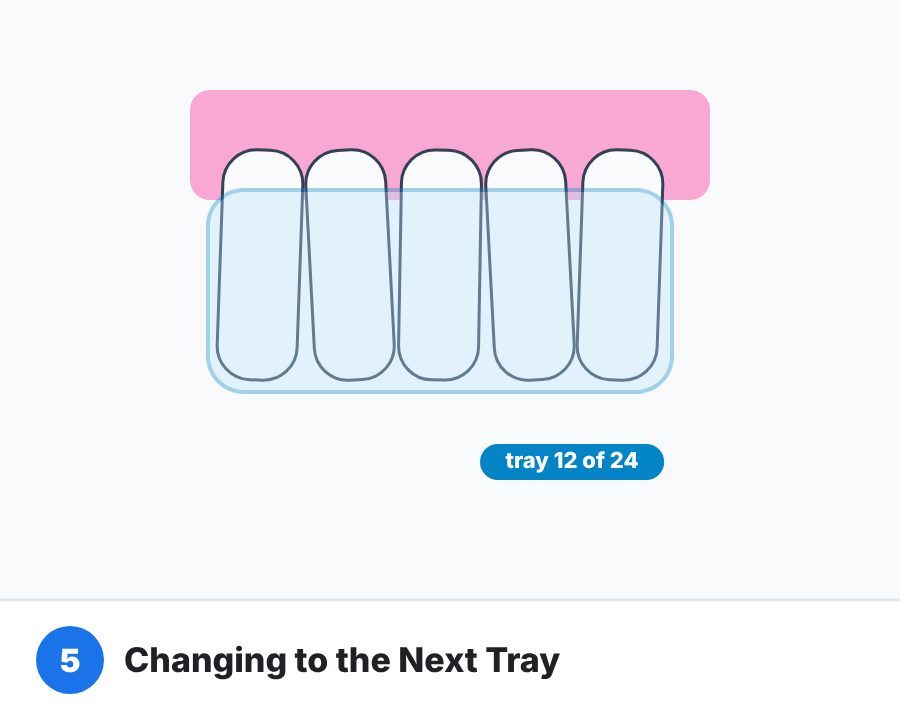
5. Changing to the Next Tray

Every one to two weeks you move to the next aligner in the series. Regular check-ups confirm that each tooth is following the plan.

If teeth fall behind - often because aligners were not worn enough - a refinement scan and additional aligners bring them back on track.

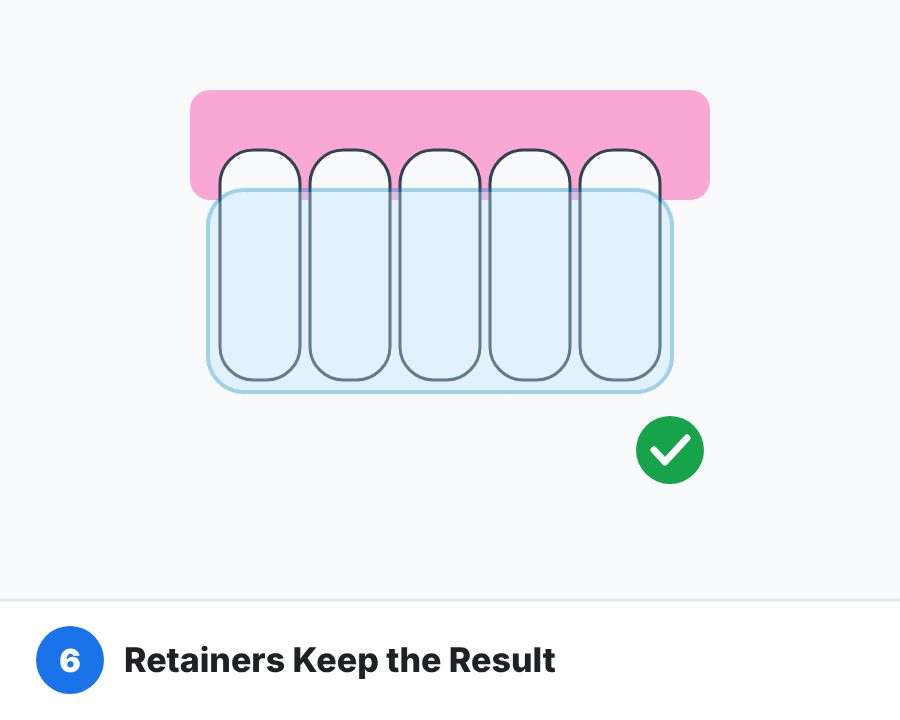
6. Retainers Keep the Result

When the last aligner is complete, the attachments are removed and retainers are made. A clear retainer looks like an aligner and is usually worn at night.

Without retainers, teeth tend to move back. Wearing them as advised protects the result for years.

Retainers Keep the Result