Menu

Around Kharadi

411014411036411006

Wagholi side

412207411047411015

Hadapsar side

411028411013

Everywhere else

All areas we serve

Tooth extraction — your questions answered

When a tooth has to come out, what it feels like, what it costs and what replaces it. Answered by our registered dental surgeons.

Answered by Dr Avinash Bamane (A-18814) and Dr Rashmi Bamane (A-22726), Maharashtra State Dental Council. General information, not a diagnosis — nothing here replaces looking in your mouth.
Full answer · 570 words

does a tooth extraction hurt

The extraction itself should not hurt. Local anaesthetic numbs the tooth, gum and surrounding bone, so you feel pressure, pushing and sometimes a cracking sound, but not sharp pain. The soreness comes later, once the numbness wears off, and usually settles over two to four days with the painkiller your dentist advises.
Read the full answer →
Answered by Dr Sunny Deshmukh, MDS (Oral & Maxillofacial Surgery) · Approved by Dr Avinash Bamane (A-18814) · Last reviewed 23 October 2026
Full answer · 559 words

how long does it take to heal after a tooth extraction

For a simple extraction, the gum usually closes over in about one to two weeks and you feel normal within a few days. The bone underneath takes several months to fill in completely. Surgical and wisdom tooth extractions take longer, and smoking, tobacco or uncontrolled diabetes can slow everything down.
Read the full answer →
Answered by Dr Laxman Revansidh Malkunje, MDS (Oral & Maxillofacial Surgery) · Approved by Dr Rashmi Bamane (A-22726) · Last reviewed 23 October 2026
Full answer · 516 words

what can i eat after a tooth extraction

For the first day, eat soft, cool or lukewarm food such as curd, khichdi, dal, mashed potato, idli or banana, and chew on the other side. Avoid hot, spicy, crunchy and seedy food, and do not use a straw. Most people return to normal meals within three to five days, sooner for a simple extraction.
Read the full answer →
Answered by Dr Soumyabrata Ghosh, MDS (Oral & Maxillofacial Surgery) · Approved by Dr Avinash Bamane (A-18814) · Last reviewed 23 October 2026
Full answer · 538 words

what is dry socket and how do i avoid it

Dry socket is when the blood clot in an extraction socket breaks down or is lost too early, leaving bone exposed. It causes strong, throbbing pain two to four days after the extraction, often spreading to the ear. You lower the risk by avoiding smoking, tobacco, spitting, straws and vigorous rinsing in the first days.
Read the full answer →
Answered by Dr Vikrant Prasad, MDS (Oral & Maxillofacial Surgery) · Approved by Dr Rashmi Bamane (A-22726) · Last reviewed 23 October 2026
Full answer · 539 words

when should i replace an extracted tooth

Ideally, plan the replacement before the tooth comes out. An implant can sometimes be placed the same day, but more often after two to six months of healing. A bridge is usually made once the gum has settled, and a denture can be fitted immediately or after healing. Waiting years lets neighbouring teeth drift and bone shrink.
Read the full answer →
Answered by Dr Shrama Darekar, MDS (Oral & Maxillofacial Surgery) · Approved by Dr Avinash Bamane (A-18814) · Last reviewed 23 October 2026
Full answer · 477 words

how much does a tooth extraction cost

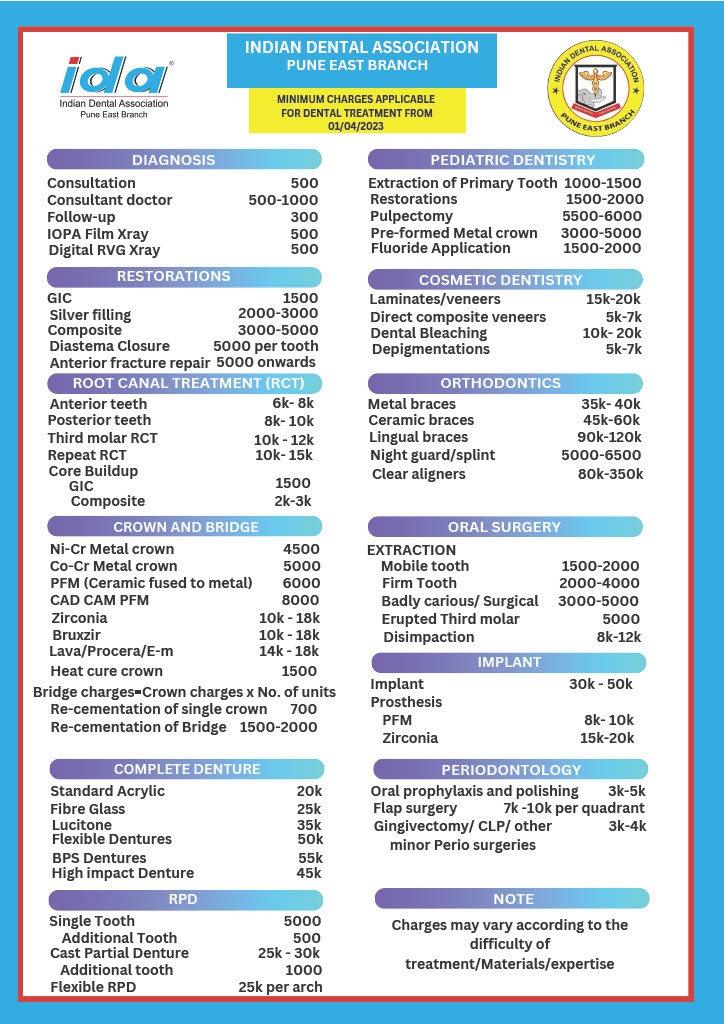
Our current published fee for a tooth extraction is from ₹1,000 for a basic extraction, ₹2,000 for a difficult one and ₹4,000 for a surgical extraction. Wisdom teeth range from ₹6,000 to ₹18,000 depending on position and nerve proximity. The consultation and X-ray are charged separately, and the final cost is confirmed after examination.
Read the full answer →
Answered by Dr Pratik Raut, MDS (Oral & Maxillofacial Surgery) · Approved by Dr Rashmi Bamane (A-22726) · Last reviewed 23 October 2026
Full answer · 514 words

why is my dentist reluctant to remove my tooth

A dentist who hesitates to remove a tooth usually believes it can still be saved, or sees a risk that needs planning first, such as a medical condition, blood-thinning medicine, or roots close to a nerve or sinus. Extraction cannot be undone. Ask your dentist to explain the reason and the alternatives clearly, in writing if possible.
Read the full answer →
Answered by Dr Kedar Vaidya, MDS (Oral & Maxillofacial Surgery) · Approved by Dr Rashmi Bamane (A-22726) · Last reviewed 23 October 2026
Full answer · 506 words

is it better to save a tooth or remove it

If the tooth has enough healthy structure, firm bone support and no crack through the root, saving it is usually better than removing it, because your own root keeps the bone and bite stable. Removal is the wiser choice when a tooth cannot be restored reliably, keeps failing, or is a wisdom tooth with no function.
Read the full answer →
Answered by Dr Mayank Patil, MDS (Oral & Maxillofacial Surgery) · Approved by Dr Avinash Bamane (A-18814) · Last reviewed 23 October 2026
Full answer · 513 words

can i have a tooth removed while pregnant

Yes, a tooth can be removed during pregnancy when it is needed. An infected or very painful tooth should not wait, because untreated infection carries more risk than the extraction. Planned extractions are best done in the second trimester. Always tell your dentist you are pregnant, and keep your gynaecologist informed.
Read the full answer →
Answered by Dr Pradip Thorat, MDS (Oral & Maxillofacial Surgery) · Approved by Dr Rashmi Bamane (A-22726) · Last reviewed 23 October 2026
Full answer · 466 words

do i need antibiotics after a tooth extraction

Usually not. Most simple extractions in healthy people heal well without antibiotics, and taking them unnecessarily causes side effects and drug resistance. Your dentist may prescribe them if there is spreading infection, a difficult surgical extraction, or a medical condition such as poor immunity or certain heart problems. Never take leftover or chemist-suggested antibiotics on your own.
Read the full answer →
Answered by Dr Pratik Hande, MDS (Oral & Maxillofacial Surgery) · Approved by Dr Avinash Bamane (A-18814) · Last reviewed 23 October 2026
Full answer · 516 words

is extraction safe if i take blood thinners

Yes, in most cases an extraction is safe while you take blood thinners, with planning. Many patients on aspirin or clopidogrel continue them unchanged. Warfarin or acenocoumarol usually needs a recent INR test, and newer blood thinners may need dose timing advised by your physician. Never stop a blood thinner on your own.
Read the full answer →
Answered by Dr Soumyabrata Ghosh, MDS (Oral & Maxillofacial Surgery) · Approved by Dr Rashmi Bamane (A-22726) · Last reviewed 23 October 2026

can i go to work after a tooth extraction

After a simple extraction, most people with desk jobs can return to work the next day, and some the same afternoon. Rest for the remainder of the day if you can. After a surgical or wisdom tooth extraction, or if your work is physical, plan for two to three days off.

It depends on two things: how involved the extraction was and what your work involves.

  • Simple extraction, desk job: next day is usually fine. You may be able to work from home the same afternoon, though your lip will be numb for a few hours and calls will be awkward.
  • Surgical or wisdom tooth extraction: expect swelling to peak on day two or three. Two to three days off is sensible.
  • Physical work, gym or sport: avoid heavy lifting and strenuous exercise for at least 48 to 72 hours. Raised blood pressure from exertion can restart bleeding.

Our written aftercare asks you not to ride or drive yourself home after surgery, so arrange a lift or a cab rather than taking your two-wheeler through traffic with a mouthful of gauze. For surgical extractions, bring a companion.

If you work in one of Kharadi's IT parks, a late-evening slot can help: our Kharadi clinic is open until 11 PM, so you can have the extraction after work and rest overnight. Book online to reserve the time. For what to eat and how to care for the socket at your desk, see our tooth extraction page.

Answered by Dr Chinmay Gokhale, MDS (Oral & Maxillofacial Surgery) · Approved by Dr Avinash Bamane (A-18814) · Last reviewed 23 October 2026

how long will the bleeding last after an extraction

Active bleeding should slow to an ooze within the first hour while you bite on gauze, and pinkish saliva can continue for up to 24 hours. That is normal. Bleeding that fills your mouth, or does not slow after two rounds of firm pressure for 30 to 45 minutes, needs a call to your dentist.

A little blood mixed with saliva looks like a lot, so it helps to know what is normal.

  • First hour: bite firmly on the gauze pad. Our aftercare asks for exactly 45 minutes of steady pressure, without changing it to look.
  • Rest of the day: slight oozing and pink-tinged saliva are expected.
  • Next 24 hours: occasional streaks, especially after eating or on waking.

If it is still bleeding

  1. Wipe away loose clots gently with clean gauze. Do not rinse or spit.
  2. Fold a fresh gauze piece, or use a moist tea bag, over the socket and bite firmly for another 30 to 45 minutes.
  3. Sit upright and rest; keep your head raised on pillows at night.
  4. Avoid hot drinks, exercise, alcohol and smoking.

Call 8484 990 678 if bleeding is heavy, fills your mouth, or has not slowed after two rounds of pressure. Our Kharadi clinic is open until 11 PM. After hours, uncontrolled bleeding should be seen at a hospital emergency department; see our emergency dentist page. If you take blood thinners, mention this before the extraction so extra measures can be planned.

Answered by Dr Nachiket Shah, MDS (Periodontics) · Approved by Dr Rashmi Bamane (A-22726) · Last reviewed 23 October 2026

when can i brush after a tooth extraction

You can brush the rest of your teeth gently the same night or the next morning, but avoid the extraction site for the first 24 hours. After that, brush close to the area slowly with a soft brush, and use warm salt-water rinses instead of vigorous rinsing or mouthwash.

Keeping your mouth clean helps healing, but the socket itself needs to be left alone at first.

  • First 24 hours: our aftercare asks for no brushing and no rinsing near the site. You can brush other teeth gently, keeping the brush away from the wound and letting toothpaste froth fall out rather than spitting hard.
  • After 24 hours: start gentle warm salt-water rinses, especially after meals. Take a mouthful, tilt your head side to side, and let it fall into the basin.
  • Days 2 to 7: brush the teeth next to the socket with a soft brush and small, slow strokes. Do not scrub the socket itself.
  • Mouthwash: skip strong, alcohol-based mouthwash for the first week. Use a medicated rinse only if your dentist prescribes one.

Do not poke the socket with a toothpick, finger or tongue to remove food. If food sticks, a gentle salt-water rinse is enough. If stitches were placed, they are usually checked or removed at the follow-up about 8 days later. More aftercare tips are on our tooth extraction page.

Answered by Dr Rahul Bagrecha, MDS (Oral & Maxillofacial Surgery) · Approved by Dr Avinash Bamane (A-18814) · Last reviewed 23 October 2026

can smoking delay healing after an extraction

Yes. Smoking is one of the biggest causes of slow healing and dry socket after an extraction. The suction of drawing on a cigarette can pull out the clot, and nicotine reduces blood flow to the wound. Gutkha, kharra, mishri and chewing tobacco do similar damage, so avoid all tobacco for at least several days.

Smoking harms a fresh socket in three ways:

  • Suction: drawing on a cigarette or beedi creates negative pressure in the mouth that can dislodge the clot.
  • Reduced blood supply: nicotine narrows blood vessels, so less oxygen and fewer healing cells reach the wound.
  • Heat and chemicals: smoke irritates the tissue and raises infection risk.

Smokeless tobacco is no safer. Gutkha, kharra, mishri and tobacco with supari sit right against the healing gum and are a common reason for painful sockets in Pune.

What we ask

Our written instructions ask for no smoking, alcohol, tobacco or mishri for 48 hours before and 72 hours after surgery, and no tobacco or alcohol for 4 to 5 days afterwards. Longer is better. If you cannot stop, at least avoid the first 72 hours completely, and never smoke or chew near the side of the extraction.

Many people find an extraction a good moment to try quitting, since the first few days are already the hardest. If you use nicotine gum or patches, tell your dentist. Signs of dry socket and how to prevent it are explained on our page on alveolar osteitis.

Answered by Dr Sunny Deshmukh, MDS (Oral & Maxillofacial Surgery) · Approved by Dr Rashmi Bamane (A-22726) · Last reviewed 23 October 2026

what happens to the gap after a tooth is removed

The socket first fills with a blood clot, then with gum and new bone over a few months. The bone also shrinks, mostly in the first months. Over time, the teeth beside the gap can tilt into it and the opposing tooth can grow down, which changes your bite and traps food.

A gap is not static. Several things happen after a tooth comes out:

  1. Healing: the clot is replaced by gum within a few weeks and by new bone over three to six months.
  2. Bone shrinkage: the ridge of bone where the tooth stood gets narrower and lower. The biggest change happens in the first months and continues slowly after that. This can make a future implant harder without a bone graft.
  3. Drifting: the teeth on either side lean or slide into the space, opening small gaps elsewhere.
  4. Over-eruption: the tooth in the opposite jaw has nothing to bite against and slowly grows down into the gap.
  5. Bite and cleaning problems: tilted teeth trap food, are harder to clean, and are more prone to decay and gum disease. Many people start chewing only on the other side.

None of this happens overnight, and not every gap causes trouble. A removed wisdom tooth usually leaves no problem at all. But a missing first molar or front tooth is worth planning for. Our missing teeth page and replacement options explain what can be done and when.
Answered by Dr Laxman Revansidh Malkunje, MDS (Oral & Maxillofacial Surgery) · Approved by Dr Avinash Bamane (A-18814) · Last reviewed 23 October 2026

Still not sure?

A question answered online is general. An examination is specific to your tooth. Kharadi runs late, and reception will tell you honestly if you do not need to come in yet.

Book — Rs 500 ☎ 8484990678