what is dry socket
Dry socket (alveolar osteitis) is a painful complication after a tooth extraction, when the blood clot in the socket breaks down or is lost too early and the bone underneath is left exposed. It usually starts two to four days after the extraction with severe, throbbing pain that often spreads to the ear. It needs a visit back to your dentist.
After a tooth is removed, a blood clot forms in the empty socket. That clot is the foundation on which new gum and bone grow. In a dry socket, the clot dissolves or gets dislodged before healing has properly begun, and the bone in the socket is left bare. It is one of the more painful things that can happen after an extraction, but it is treatable and it heals.
How to tell it apart from normal healing
- Normal: soreness that is worst on the first day or two and then steadily improves.
- Dry socket: pain that gets better at first and then becomes much worse around day two to four, deep and throbbing, often spreading to the ear, temple or neck on the same side. Ordinary painkillers barely touch it.
- The socket may look empty, with greyish bone visible instead of a dark red clot.
- A bad taste or bad smell from the area.
Dry socket usually does not cause much swelling or fever. If swelling keeps increasing, you have a fever, or pus is coming out, that points more towards an infection, which also needs to be seen.
Who is more at risk
- Smokers, and people who use gutkha, kharra, mishri or other tobacco soon after the extraction.
- Lower wisdom tooth removals and other difficult or surgical extractions.
- Anyone who has had a dry socket before.
- Women taking oral contraceptive pills, in some studies.
- Vigorous spitting, rinsing or sucking through a straw in the first day.
How it is treated
Go back to the dentist who did the extraction, or call us. Treatment is simple: the socket is gently washed out to remove food and debris, and a soothing medicated dressing is placed in it. The relief from the dressing is often quick. The dressing may need to be changed once or twice over the next few days. Your dentist will advise suitable painkillers. Healing usually takes around a week to ten days. Do not pack the socket with cloves, tobacco or home remedies; they can irritate the bone further.
How to lower your risk
These are the after-surgery instructions we give our patients:
- Bite on the gauze for 45 minutes after the extraction.
- Do not spit for 24 to 48 hours. Let saliva fall out or swallow it.
- No straw, smoking, rinsing or brushing near the socket for the first 24 hours.
- Warm saltwater rinses only after 24 hours, and gently.
- No smoking, tobacco or mishri for at least 72 hours, and no tobacco or alcohol for four to five days.
- Use an ice pack, 20 minutes on and off, a few times on the first day.
If you smoke and cannot stop for a few days, tell your dentist before the extraction so they can plan for it.
When it is an emergency
Our Kharadi clinic is open until 11 PM, seven days a week. Call 8484 990 678. After hours, go to a hospital emergency department if you have facial swelling spreading towards the eye or neck, difficulty breathing or swallowing, or bleeding that will not stop. See our emergency dentist page, our page on alveolar osteitis, and what to expect from a tooth extraction.
Want this looked at properly?
Kharadi runs late. Reception will tell you honestly whether you need an appointment yet.
Book — Rs 500 ☎ 8484990678Related questions
Read the full guide
Complete articles from our dental health blog, written by our MDS panel.
 Teeth: anatomy and scienceTooth anatomy5 min read
 Oral health and general healthDiabetes and oral health5 min read
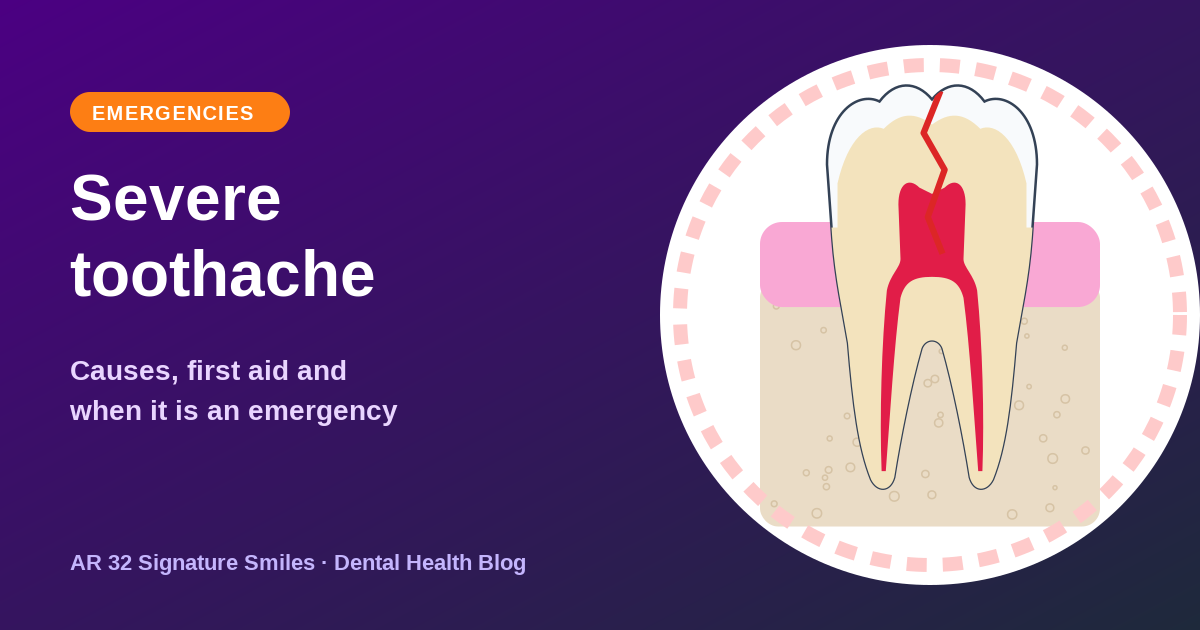 Dental emergenciesSevere toothache6 min read