can a crowned tooth still decay
Yes. The crown itself cannot decay, but the natural tooth underneath can, usually at the margin where the crown ends near the gum. This recurrent decay is the most common reason crowns fail. It is often painless until advanced, so daily cleaning at the gumline, limiting frequent sugar and regular check-ups with X-rays matter even more after a crown.
Many patients think of a crown as armour: once the tooth is capped, it can never decay again. Unfortunately that is not how it works. The crown covers most of the tooth, but not all of it. The weak point is where the two meet.
Where the decay starts
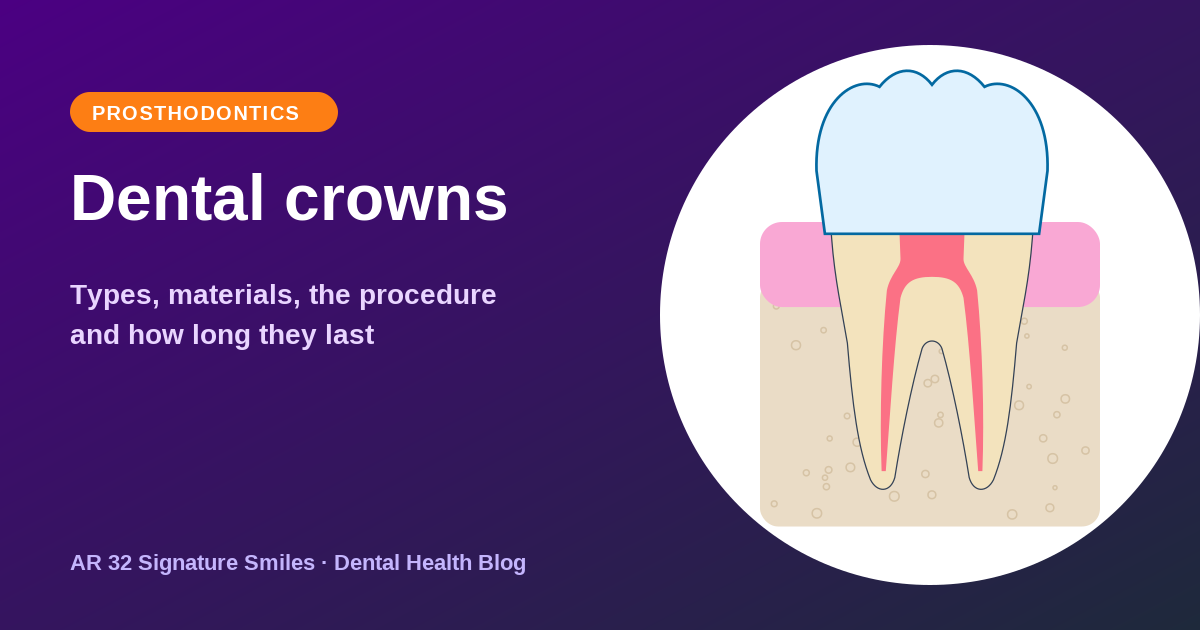
Every crown has a margin, the edge where porcelain or metal ends and natural tooth begins. It usually sits at or just under the gumline. Even with an excellent fit there is a microscopic junction there, sealed by cement. Plaque that sits on this junction day after day produces acid that dissolves the tooth just below the crown. Dentists call this secondary or recurrent decay.
If the gum recedes, the margin is left above the gum and some of the root surface is exposed. Root surfaces have no enamel and decay faster than the crown of a tooth, so recession raises the risk further.
Who is at higher risk
- People who sip sweet tea, cold drinks or juices through the day, or snack often on biscuits and mithai.
- People with dry mouth, from medicines (for example some blood pressure, allergy and antidepressant tablets), diabetes, mouth breathing or older age.
- Anyone who does not clean between teeth. The contacts beside a crown trap food.
- Crowns with poorly fitting margins, ledges or gaps where plaque collects.
- People with receding gums or gum disease.
- Gutkha and supari users, whose gums often recede early.
Why you might not notice
Decay under a crown is often silent, especially if the tooth has had a root canal and no longer has a nerve to warn you. Signs, when they appear, include a dark line or shadow at the crown edge, a bad taste or smell from one spot, food catching at the margin, a crown that starts to feel loose, or sensitivity returning in a tooth that had settled. The crown also hides the decay from view, which is why digital X-rays at check-ups are important: they can show a shadow under the margin before you feel anything.
What can be done once it is found
- Small and accessible: the decay can sometimes be cleaned out and filled at the margin without removing the crown.
- Larger or under the crown: the crown is removed, the decay cleaned, the tooth rebuilt, and a new crown made.
- Reached the nerve: root canal treatment is needed before the new crown, or a repeat root canal if the tooth was treated before.
- Too much tooth lost: sometimes the tooth cannot be saved and has to be removed and replaced.
The earlier it is caught, the further up this list you stay, and the less it costs.
Protecting a crowned tooth
- Brush twice a day with fluoride toothpaste, holding the brush at an angle into the gumline of the crown.
- Floss or use an interdental brush daily. Floss should slide under the gum edge on both sides of the crown.
- Keep sugar to mealtimes. How often you have sugar matters more than how much.
- If your mouth is dry, sip water through the day and tell your dentist; extra fluoride may be advised.
- Have regular check-ups so the margins are examined and, when needed, X-rayed.
Read more about how decay develops on our cavities and tooth decay page and on gum recession. Related crown questions are on the crowns and bridges hub.
Want this looked at properly?
Kharadi runs late. Reception will tell you honestly whether you need an appointment yet.
Book — Rs 500 ☎ 8484990678Related questions
Read the full guide
Complete articles from our dental health blog, written by our MDS panel.
 Crowns, bridges and denturesDental crowns7 min read
 Teeth: anatomy and scienceTooth anatomy5 min read
 Oral health and general healthDiabetes and oral health5 min read