can a cavity form under a filling
Yes. Dentists call it secondary or recurrent decay. It starts at the edge of a filling, where a tiny gap, a chipped margin or worn material lets plaque and bacteria get in. It is often painless and hard to see, so it is usually found on an X-ray or at a check-up rather than by the patient.
A filling repairs the hole, but it does not make the tooth immune to decay. The join between the filling and the tooth, called the margin, is a weak point. If plaque settles there, decay can start again and creep underneath the filling, out of sight.
Why it happens
- Tiny gaps at the edges. Over years, fillings wear, chip or shrink slightly away from the tooth. Bacteria can get into a gap far too small for you to feel.
- Old silver fillings. Amalgam fillings that have been in for many years often develop ditched or cracked edges.
- A filling that is cracked or partly broken, often from biting on something hard such as supari, ice or a bone.
- Edges that are hard to clean, especially fillings between teeth, near the gum, or under an overhanging edge.
- The same habits that caused the first cavity. If the sugar pattern and cleaning have not changed, the tooth stays at risk.
Signs to watch for
- A dark line or shadow along the edge of a filling.
- Food or floss catching on the filling, or floss shredding.
- New sensitivity to sweet or cold in a tooth that was comfortable.
- A rough edge you can feel with your tongue.
- A bad taste from one spot.
Often there are no signs at all. Decay under a filling can grow quite large before it causes pain, because the filling hides it.
Why an X-ray is often needed
Your dentist cannot see through a filling. A digital X-ray shows decay under or beside it as a darker area. It is not perfect, because some materials and angles hide things, so your dentist combines the X-ray with a close look and a gentle check of the margins. A dark shadow under an old silver filling can also be stain from the metal rather than decay, which is another reason to judge with an X-ray and not by looking alone.
What the treatment usually involves
- Small decay at the edge: the old filling is removed, the decay is cleaned out, and a new filling is placed. It is usually a little larger than the old one.
- Large decay or a weakened tooth: an onlay (a laboratory-made partial cover) or a crown may be suggested to hold the remaining tooth together.
- Decay that has reached the pulp (the nerve and blood supply inside the tooth): root canal treatment is usually needed before the tooth is rebuilt. Complex cases can be referred to our endodontics department.
Replacing a filling is not a sign that the first dentist did a bad job. Every filling has a lifespan, and how long it lasts depends heavily on the bite, the size of the original cavity, and home care.
Costs with us
Our current published fees include ₹500 for an RVG X-ray, composite fillings from ₹3,500, and ₹8,000 for an onlay, all listed in our online store. The final cost is confirmed after examination, because the size of the decay is only clear once the old filling is out.
How to make fillings last
Clean between your teeth daily, keep sweet things to mealtimes, avoid cracking hard supari or ice with filled teeth, and come for check-ups so small leaks are caught early. Our tooth restoration page has more on fillings.
Want this looked at properly?
Kharadi runs late. Reception will tell you honestly whether you need an appointment yet.
Book — Rs 500 ☎ 8484990678Related questions
Read the full guide
Complete articles from our dental health blog, written by our MDS panel.
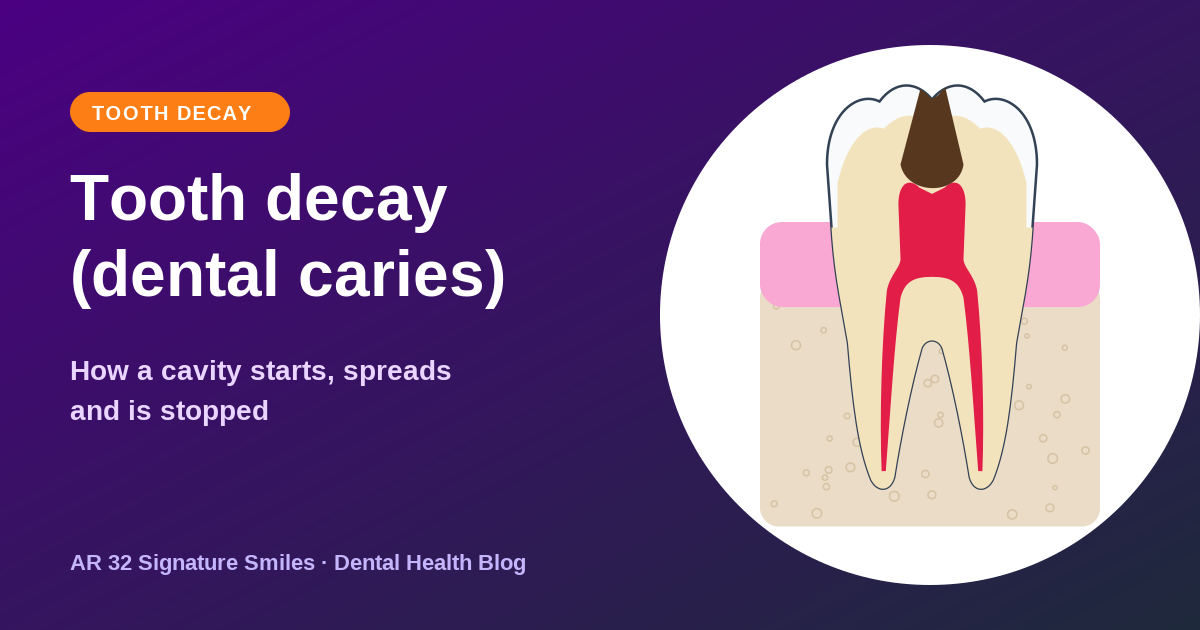 Tooth decay and fillingsTooth decay (dental caries)12 min read
 Teeth: anatomy and scienceTooth anatomy5 min read
 Oral health and general healthDiabetes and oral health5 min read