can whitening make teeth sensitive
Yes. Sensitivity is the most common side effect of whitening, usually sharp twinges to cold or air during treatment and for a few days afterwards. It is almost always temporary. Lower-strength gels, shorter sessions, a potassium nitrate toothpaste and breaks between sessions all help. Pain that lingers, throbs or keeps you awake is not normal and needs checking.
Most people who whiten feel some sensitivity. Knowing what is normal before you start means you won't panic halfway through.
Why it happens
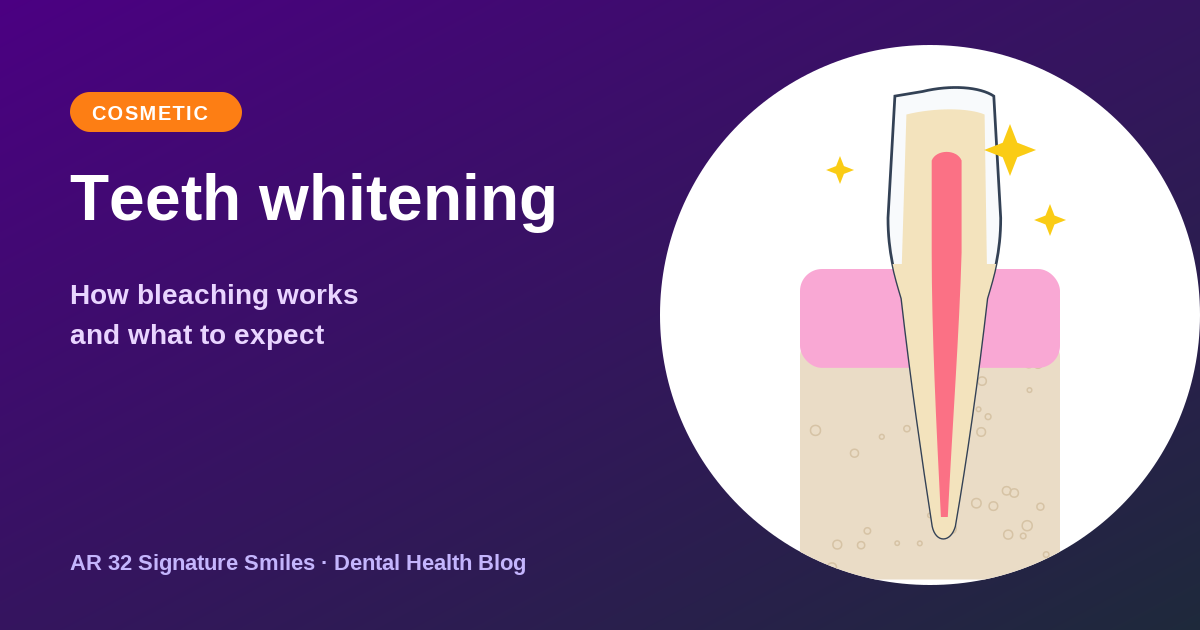
Peroxide travels through enamel into dentine, which is full of microscopic fluid-filled tubes leading to the pulp (the nerve and blood supply inside the tooth). Whitening temporarily dehydrates the tooth and leaves those tubes more open, so the nerve reacts more to cold, air and sweet. It is a reversible irritation, not damage. Stronger gels and longer contact cause more of it.
What normal whitening sensitivity feels like
- Short, sharp twinges, often called "zingers", that come and go, sometimes in a tooth you weren't expecting.
- Teeth feel touchy with cold water, ice cream or a blast of cold air on a two-wheeler.
- It starts during or within hours of a session and fades within a day or two after you stop. With tray whitening it can build up over several nights.
When it is not normal
Call your dentist if pain lingers for minutes after the cold is gone, throbs on its own, keeps you awake, or stays fixed on one tooth. That points to something underneath, such as a cavity, a cracked tooth or a leaking filling that the gel has reached. Burning, white patches on the gums mean gel has touched the gum: rinse well, stop, and get it checked. These problems are much less likely if you have a check-up before you start.
Who is more likely to be sensitive
- People who already have sensitive teeth.
- Receding gums, where exposed root surface has no enamel to protect it.
- Worn or eroded enamel from acid reflux, cola or night-time grinding.
- Cracks, untreated cavities or old fillings with gaps.
- Anyone using a strong gel too often or for too long.
How to reduce it
- Get checked and treated first. Fill cavities, replace leaking fillings and clean off tartar before whitening.
- Prepare the teeth. Your dentist may suggest brushing with a potassium nitrate desensitising toothpaste for a couple of weeks beforehand and continuing during whitening.
- Choose a gentler method if you are prone to it. Lower-strength tray gel worn for shorter periods is usually kinder than one strong session.
- Take breaks. Skipping a night or two with tray whitening is fine and does not ruin the result.
- Avoid extremes for 48 hours. Lukewarm rather than very hot chai, no ice-cold drinks, and go easy on acidic food.
- Don't overdo it. Chasing extra shades by repeating courses back to back is the main cause of sensitivity that drags on.
Your dentist may also apply a fluoride or desensitising gel in the clinic if the twinges are strong. If you already have significant sensitivity, the honest advice may be to treat that first and whiten later, or not at all. Our sensitive teeth questions cover this in more detail. To have your teeth checked before you whiten, book a consultation.
Want this looked at properly?
Kharadi runs late. Reception will tell you honestly whether you need an appointment yet.
Book — Rs 500 ☎ 8484990678Related questions
Read the full guide
Complete articles from our dental health blog, written by our MDS panel.
 Cosmetic dentistryTeeth whitening5 min read
 Teeth: anatomy and scienceTooth anatomy5 min read
 Oral health and general healthDiabetes and oral health5 min read