An impacted wisdom tooth is one that cannot come through into its normal place in the mouth, because it is blocked by the tooth in front, by bone or by thick gum. It may stay fully buried or break through only partly. Many impacted teeth cause no trouble, but partly erupted ones often trap food and lead to infection or decay.
"Impacted" simply means stuck. Wisdom teeth are the last teeth to form, usually arriving between the late teens and mid-twenties, and by then the jaw often has no room left. The tooth tries to erupt, meets an obstacle, and stays where it is, fully or partly hidden.
Dentists describe impaction by the angle of the tooth and how deep it lies:
Depth matters too. A soft-tissue impaction is covered only by gum. A partial bony impaction is partly covered by bone, and a complete bony impaction is fully buried in the jaw.
The main reason is space. Modern diets are soft, jaws tend to be smaller than the full set of 32 teeth needs, and the wisdom tooth arrives last, when every other tooth has already taken its place. Genetics plays a part: if your parents had impacted wisdom teeth, you are more likely to.
A completely buried tooth with no symptoms and no changes on X-ray may never cause trouble. Removal is not automatically required; many such teeth are simply monitored. The partly erupted tooth, half in and half out, is the one most likely to cause repeated problems.
Your dentist looks for a swollen flap of gum or a tooth edge peeking through at the very back, and takes a digital X-ray (RVG) to see the angle, roots and the bone around it. When a lower tooth seems close to the nerve canal, a CBCT or OPG scan may be advised to show it in more detail; we will tell you where it is done and what it costs.
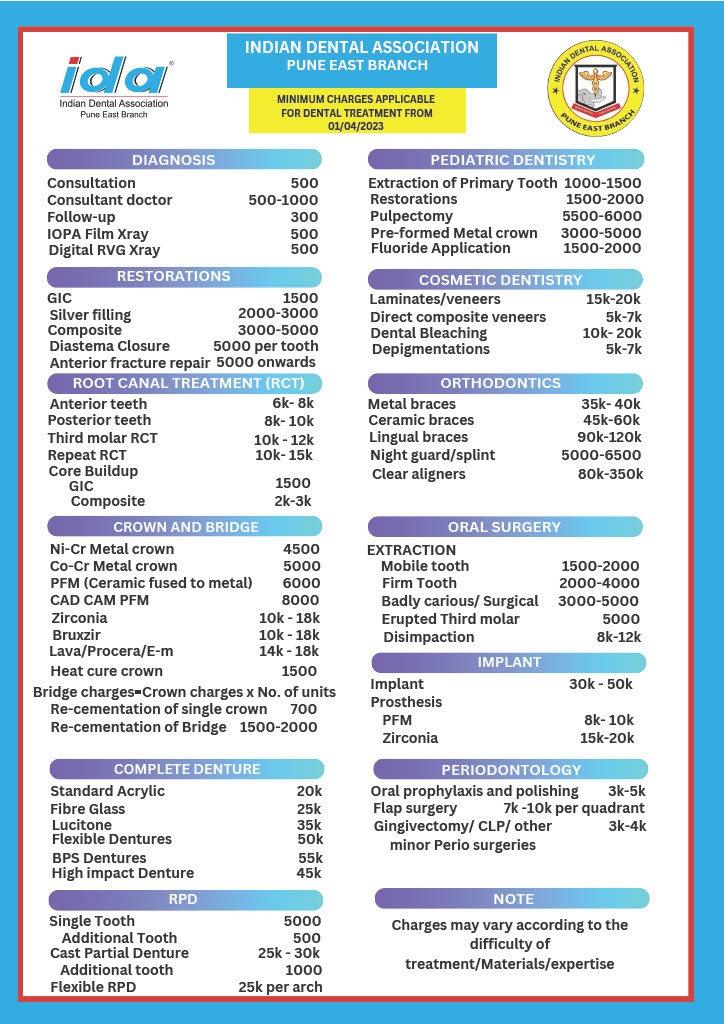
If the tooth is causing harm or is likely to, removal is usually advised. Impacted teeth often need a small surgical procedure: the gum is opened, a little bone is removed, and the tooth may be divided into pieces so it comes out with less force. These cases are planned with our oral and maxillofacial surgery department. Read more on our page on impacted teeth and on our wisdom tooth extraction page.
Kharadi runs late. Reception will tell you honestly whether you need an appointment yet.
Book — Rs 500 ☎ 8484990678