A dental examination usually takes 15 to 30 minutes of chair time. Your dentist asks about symptoms and health, checks every tooth and filling, measures the gums, looks at the tongue, cheeks and palate for unusual patches, feels the jaw joints and neck, and takes X-rays only if needed. You should leave knowing what was found and what, if anything, needs doing.
If you have not been to a dentist in a few years, the unknown is often the scariest part. Here is what a thorough examination actually involves, step by step, so nothing in the chair takes you by surprise. Nothing in a routine examination is meant to hurt; the most you should feel is a little pressure or a brief cold sensation.
You will be asked about your medical history: diabetes, blood pressure, heart problems, blood thinners, allergies, pregnancy or breastfeeding, and the medicines you take. Please be complete here, even if it seems unrelated to teeth. Bring your medicine strips or a photo of them if you are unsure of the names. You will also be asked what brought you in and whether anything hurts, bleeds or feels different.
Many patients are surprised that the examination starts with the face and neck. Your dentist looks for swelling or asymmetry, feels the lymph nodes under the jaw and in the neck, and checks the jaw joints just in front of the ears while you open and close. Clicking, deviation of the jaw or tender chewing muscles can point to grinding or joint strain, which is common among people working long screen hours.
Before the teeth, a careful dentist checks the lips, cheeks, tongue (including its sides and underside), floor of the mouth, palate and throat. This takes a minute and is one of the most important parts of the visit, especially if you chew tobacco, gutkha or supari, or smoke. A white or red patch, a non-healing ulcer or a stiff band in the cheek is noted and either reviewed or referred.
Each tooth is dried with a puff of air and examined under a light, with a mirror and a probe. Your dentist looks for:
Dental charts use a tooth-numbering system, so you may hear numbers like "36" or "47" being called out to an assistant. That is just the address of a tooth.
A thin, blunt probe with markings is slid gently between tooth and gum to measure the pocket depth. Healthy pockets are shallow; deeper ones, bleeding or receding gum suggest gum disease. Plaque and tartar build-up is also noted. This part can sting a little if your gums are inflamed.
If something is suspicious, your dentist may tap a tooth, apply cold, or ask you to bite on a stick. X-rays are taken when there is a specific question, not by default. A small intra-oral film shows one area; a wider scan is advised only if the problem needs it.
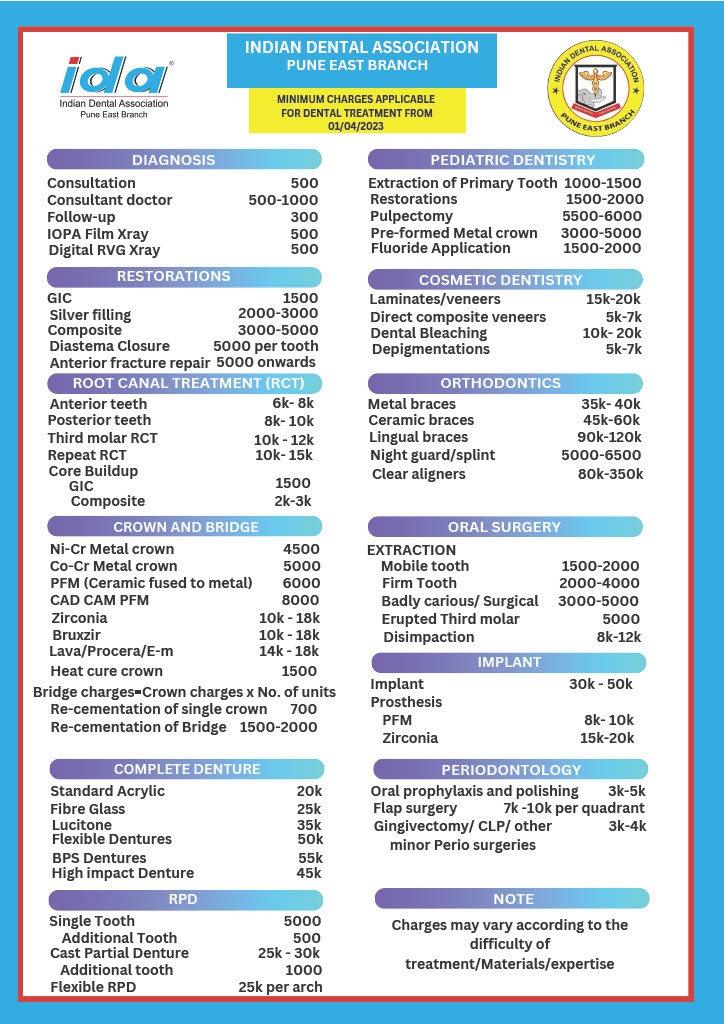
At the end you should have a clear summary: what is healthy, what needs watching, what needs treatment and how urgently, and the options with their costs. At AR 32 the plan is explained sitting up, not lying in the chair, and you are not expected to decide on the spot; our first appointment guide explains why we keep each visit to 80 minutes. A booked consultation is ₹500; you can book online. For gum findings our periodontics department may be involved. See our diagnosis hub for related questions.
Kharadi runs late. Reception will tell you honestly whether you need an appointment yet.
Book — Rs 500 ☎ 8484990678