Periodontal charting is a tooth-by-tooth record of your gum health. The dentist gently measures the depth of the gap between each tooth and gum at six points, and notes bleeding, recession, looseness and bone loss. It shows whether you have gum disease, how severe it is, and whether treatment is working.
Healthy gums hug each tooth with a shallow groove around it. When gum disease sets in, that groove deepens into a pocket where plaque and tartar collect out of reach of your brush. You cannot see or feel these pockets yourself, and they rarely hurt. Periodontal charting is how they are found and measured.
Your dentist slides a thin, blunt probe marked in millimetres into the groove at six points around each tooth: three on the cheek side and three on the tongue side. It feels like a gentle poke; tender or inflamed gums may sting briefly. The readings are noted on a chart, along with:
X-rays are then used alongside the chart to see how much bone supports each tooth.
These are general guides; your dentist will interpret your own chart with your X-rays.
The chart is what turns "your gums are a bit weak" into a precise diagnosis. It decides whether you need a routine scaling, deeper cleaning, or a specialist's care. It also tells you which teeth have a good outlook and which are doubtful, which is crucial before spending money on crowns or bridges. Putting an expensive crown on a tooth with 8 mm pockets and little bone is a poor investment.
Most importantly, it gives a baseline. A repeat chart some weeks after treatment shows whether pockets have shrunk and bleeding has stopped. Without numbers, "better" is just a feeling.
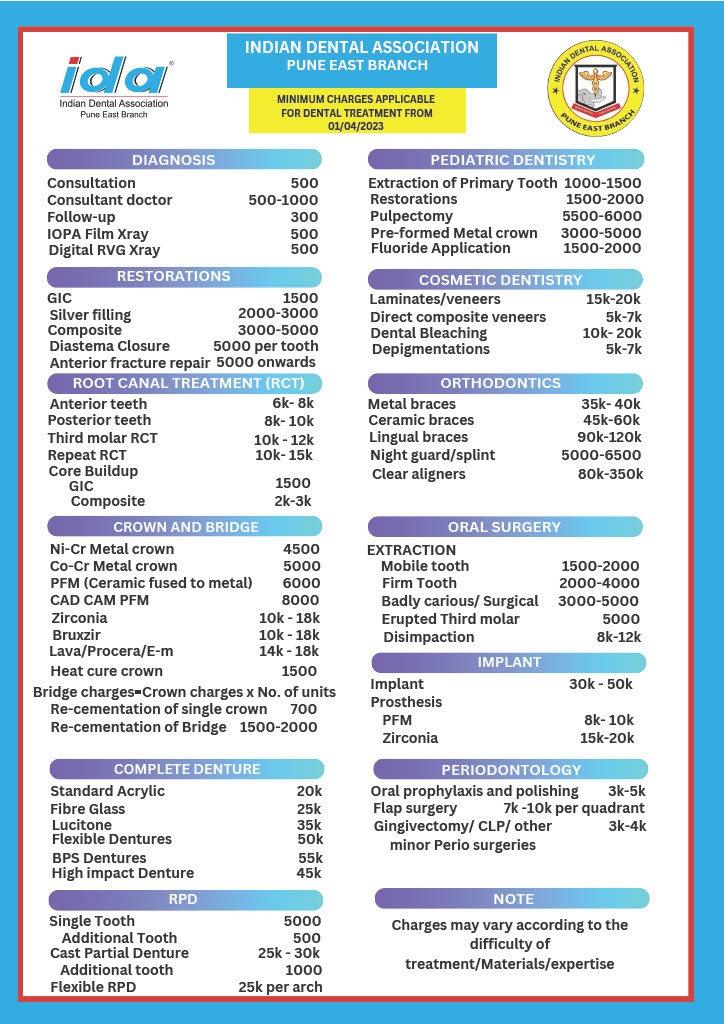
Gum assessment is part of a proper examination. Where pockets are deep or bone loss is significant, Dr Avinash or Dr Rashmi can bring in our MDS Periodontics department by prior appointment at Kharadi. Our current published fees for ultrasonic scaling run from ₹2,500 to ₹4,500 by grade, and flap surgery is from ₹8,000; see our online store. The final cost is confirmed after examination. More on gum treatment is on our gum problems page.
Kharadi runs late. Reception will tell you honestly whether you need an appointment yet.
Book — Rs 500 ☎ 8484990678