A dentist diagnoses a dental problem by putting several clues together: your description of the symptoms, a look and feel of the teeth and gums, simple chairside tests such as tapping, cold and bite tests, and usually an X-ray. No single test is enough on its own, so a careful dentist only names the problem once the clues agree.
Most patients imagine diagnosis as one moment: the dentist peers in and announces the answer. In reality it works more like a detective's job. Your dentist collects several small pieces of evidence, checks whether they point the same way, and only then names the problem. When the clues disagree, a good dentist says so rather than guessing.
The questions you are asked at the start are not small talk. Where is the pain, when did it start, what sets it off, how long does it last once it starts, does it wake you at night, does a painkiller help? A sharp zing with cold chai that fades in a second points one way. A dull throb that lingers for minutes after the cup is gone points somewhere quite different. Your medical history matters too: diabetes, blood thinners, pregnancy, acid reflux and certain medicines all change what the dentist looks for and what is safe to do.
Next comes the examination. Your dentist looks at each tooth under a good light, often drying it with air because early decay and fine cracks hide under saliva. A probe checks soft spots and the depth of the gum pockets around each tooth. They will also feel the jaw joints, the muscles and the soft tissues of the cheeks, tongue and palate. This is where many problems you never noticed turn up: worn enamel from grinding, a white patch from gutkha or supari, gum that has pulled back from the root.
If one tooth is suspected, the dentist narrows it down with quick tests:
Every test is compared with a healthy neighbouring tooth, because what matters is the difference, not the absolute response.
An X-ray shows what eyes cannot: decay between teeth, the bone around the roots, an infection at the root tip, an old filling that has leaked underneath. Most single-tooth questions are answered with a small intra-oral X-ray. A wider OPG or a 3D CBCT scan is advised only when the question needs it, for example wisdom teeth near a nerve or implant planning.
The diagnosis is where the story, the examination, the tests and the X-ray agree. Sometimes they do not agree yet, and your dentist will give a provisional diagnosis (the most likely explanation) and suggest a review, a further test or a specialist opinion. That is honest dentistry, not indecision.
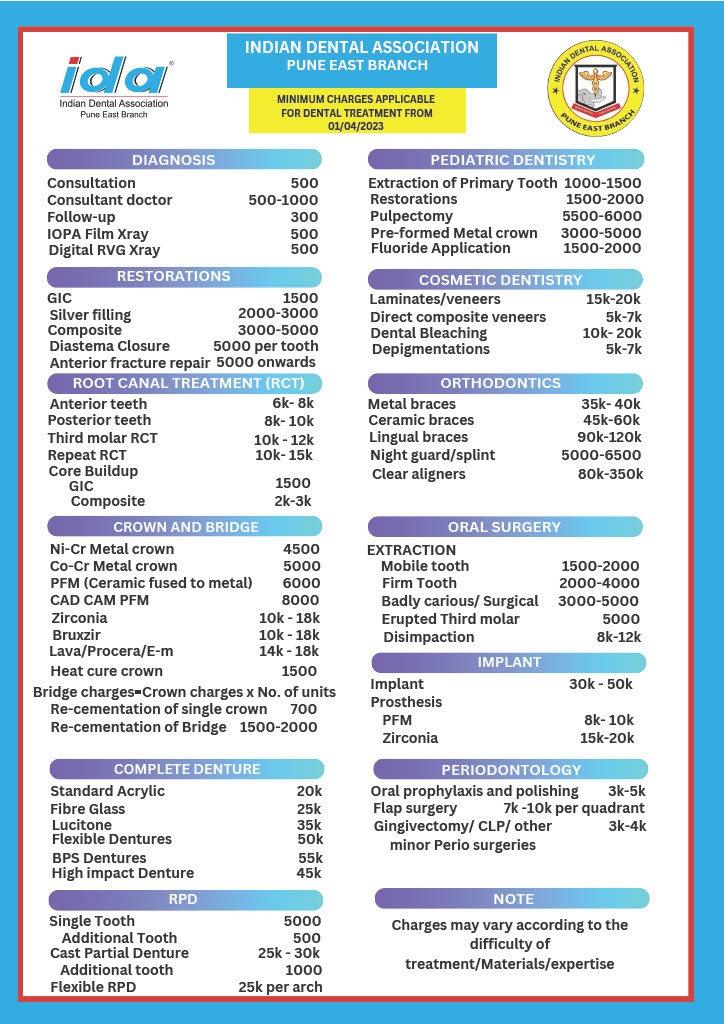
Our appointments are 80 minutes long so that history, examination, imaging and a plan with alternatives fit into one visit without rushing. We take digital RVG X-rays in the chair; our current published fee is ₹500 per RVG film, and the final cost is confirmed after examination. If an OPG or CBCT scan is advised, we will tell you where it is done and what it costs. Dr Avinash or Dr Rashmi sees you first and brings in an MDS specialist, such as our oral medicine department for unusual patches or swellings, when the case needs it. You can book a consultation online, and more answers on this subject are on our diagnosis and guidance hub.
Kharadi runs late. Reception will tell you honestly whether you need an appointment yet.
Book — Rs 500 ☎ 8484990678