Consent in dentistry is not a formality. You decide what happens to your body, and that includes X-rays. A good dentist will respect a refusal, explain the consequences plainly, and record your decision. What a good dentist will not do is pretend the X-ray did not matter.
Common reasons people say no, and what to know
- Worry about radiation. A small digital intra-oral X-ray gives a very low dose, roughly the natural background radiation of a day or so. If the worry is cumulative exposure, ask whether a recent X-ray from elsewhere can be used, or whether a single small film can replace a larger scan.
- Pregnancy. This is a good reason to postpone routine X-rays. For urgent problems, a single X-ray with a lead apron is generally considered acceptable. Discuss it rather than refusing outright.
- Cost. Ask what the X-ray costs and what it will decide. Sometimes it prevents a far more expensive mistake.
- Feeling that it is a sales tactic. Ask to see the image and have it explained. If you cannot get a clear reason, that is useful information about the clinic.
- Gagging. Tell your dentist. Sensor position, numbing spray, breathing techniques or a panoramic view instead can help.
When refusing is reasonable
- A routine check-up where you had good X-rays recently.
- A visible, shallow cavity on a front tooth where the depth is obvious.
- Soft tissue problems such as ulcers, where an X-ray would not help.
- Non-urgent care during pregnancy, postponed until after delivery.
When refusing makes treatment unsafe
Some treatments should not be done without imaging, and a careful dentist may decline to do them:
- Root canal treatment: the dentist needs to see root length, curves and the number of canals, and check the final filling. Doing it blind risks missed canals and failure.
- Extractions, especially wisdom teeth, where roots may be curved, fused or close to a nerve or sinus.
- Implants: placing one without knowing bone height and nerve position is not acceptable practice.
- Deep decay or unexplained pain: without imaging, the dentist may be unable to say whether a filling, root canal or extraction is right.
In these cases, a dentist who refuses to proceed is not being difficult. They are protecting you, and themselves, from avoidable harm.
How to decline well
- Ask: what question will this X-ray answer, and how will the answer change my treatment?
- Ask whether there is a smaller or lower-dose option.
- Offer recent X-rays from another clinic, if you have them.
- If you still decline, ask the dentist to note it in your records along with what treatment can and cannot safely be done without it.
- Agree a plan for when you might reconsider, for example if symptoms worsen.
At AR 32
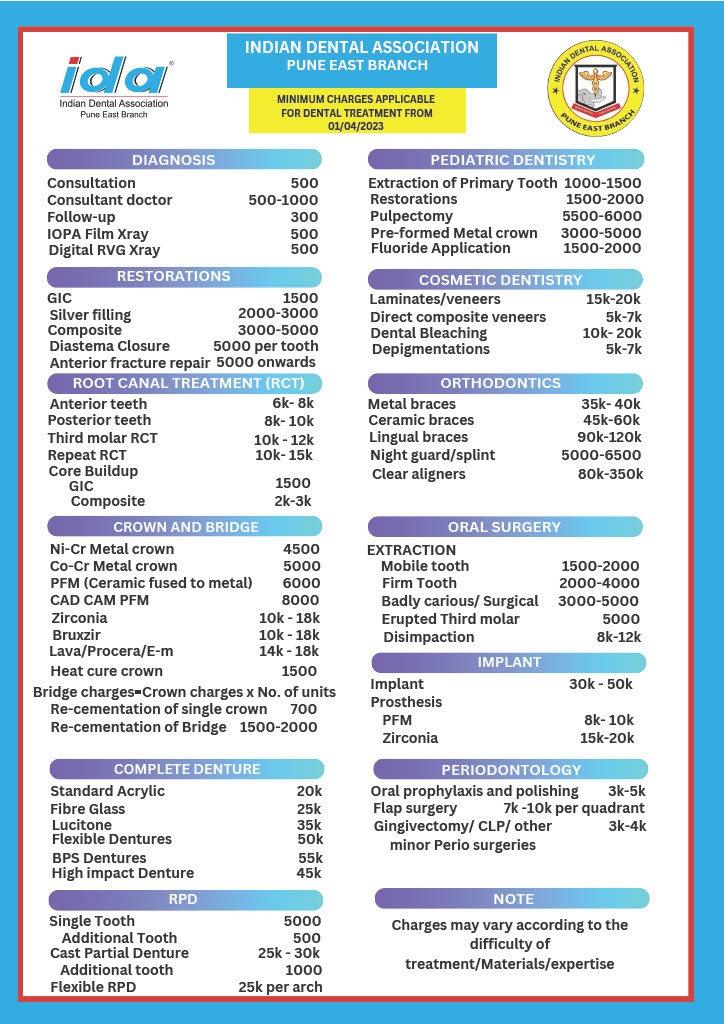
We explain why an X-ray is suggested and go through the image with you. Our current published fee for a digital RVG X-ray is ₹500, listed on the online store, with the final cost confirmed after examination. You can decline, and we will tell you honestly what we can and cannot do without it. More on X-ray safety is on our diagnosis hub.