Yes, in most cases a cavity in a milk tooth should be treated. Milk teeth hold space for adult teeth, and the back ones stay until about 10 to 12 years. Untreated decay can cause pain, abscess and damage to the adult tooth developing underneath. The main exception is a tooth that is about to fall out anyway.
"It's only a milk tooth, it will fall out anyway" is one of the most common things we hear from parents, and from grandparents too. It sounds sensible, but it is often wrong, because of timing. The front milk teeth fall out at around six to eight years, yet the milk molars at the back usually stay until ten to twelve. A cavity in a four-year-old's back tooth may have six or more years of work left to do.
Treatment depends on how deep the decay is, how old the child is and how long the tooth still needs to last:
Your dentist may advise leaving a cavity alone if the tooth is already loose and the adult tooth is close to coming through, or if the decay is shallow and has clearly stopped progressing (it looks dark, hard and shiny rather than soft and chalky). With a very young child, the plan may be to control the decay first with fluoride and diet changes, and treat it once the child can cooperate. This is a judgement made at an examination, ideally with an X-ray, not a rule of thumb.
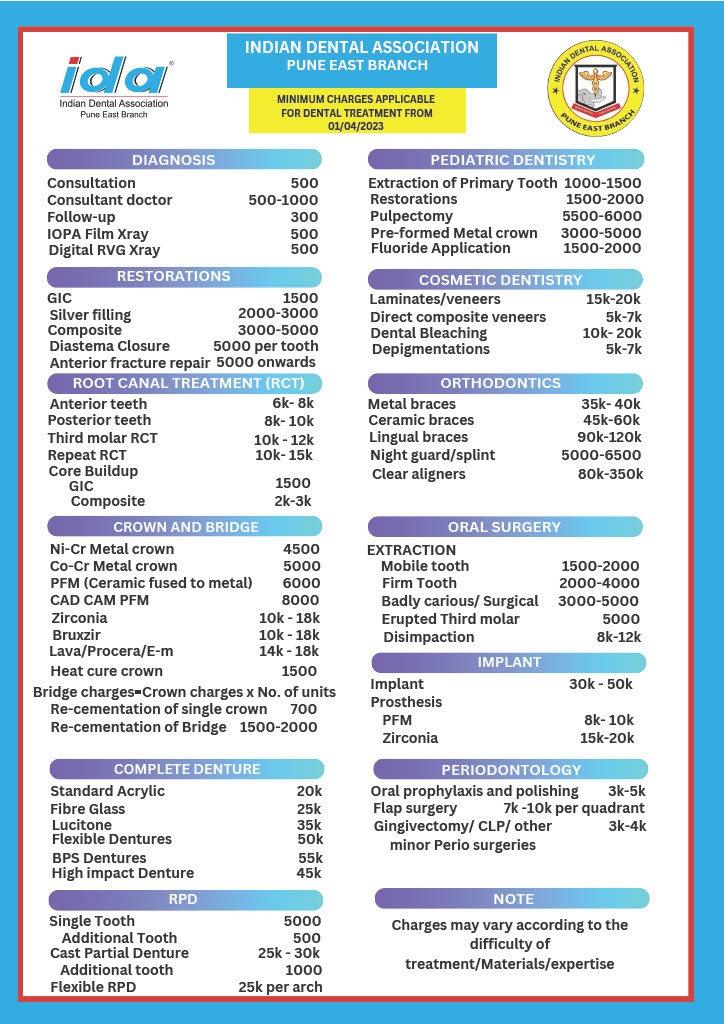
For children under 10, we recommend our MDS Pedodontics department, who see children at Kharadi by prior appointment. Our current published fee for an MDS specialist consultation is ₹1,500. The treatment cost is confirmed only after the examination, because it depends entirely on what is found. You can book through our booking engine.
To understand how decay progresses in young children, see our page on decay in milk teeth.
Kharadi runs late. Reception will tell you honestly whether you need an appointment yet.
Book — Rs 500 ☎ 8484990678