A complete denture replaces every tooth in the upper or lower jaw and rests on the gums and palate, held mainly by suction and muscle control. A partial denture replaces only some missing teeth and clips onto your remaining natural teeth for support. Which one you need depends on how many healthy teeth you still have and whether they are worth keeping.
Both are removable dentures, and both are made of a gum-coloured base carrying artificial teeth. The difference is what holds them in place, and that changes how they feel, how they are cared for and what can go wrong.
A complete denture is used when all the teeth in one jaw are missing, or the remaining ones cannot be saved. It sits directly on the gums and the bone ridge underneath.
A partial denture fills gaps when some natural teeth remain. It rests partly on the gums and partly on the neighbouring teeth, using clasps (small clips) or rests that sit on those teeth.
Your dentist will look at the remaining teeth before recommending either. Some questions that shape the decision:
As a rule, keeping healthy natural teeth is worth it. Even a few teeth under a partial denture help preserve the bone and give better chewing than a complete denture. Removing sound teeth just to make a complete denture is rarely a good idea.
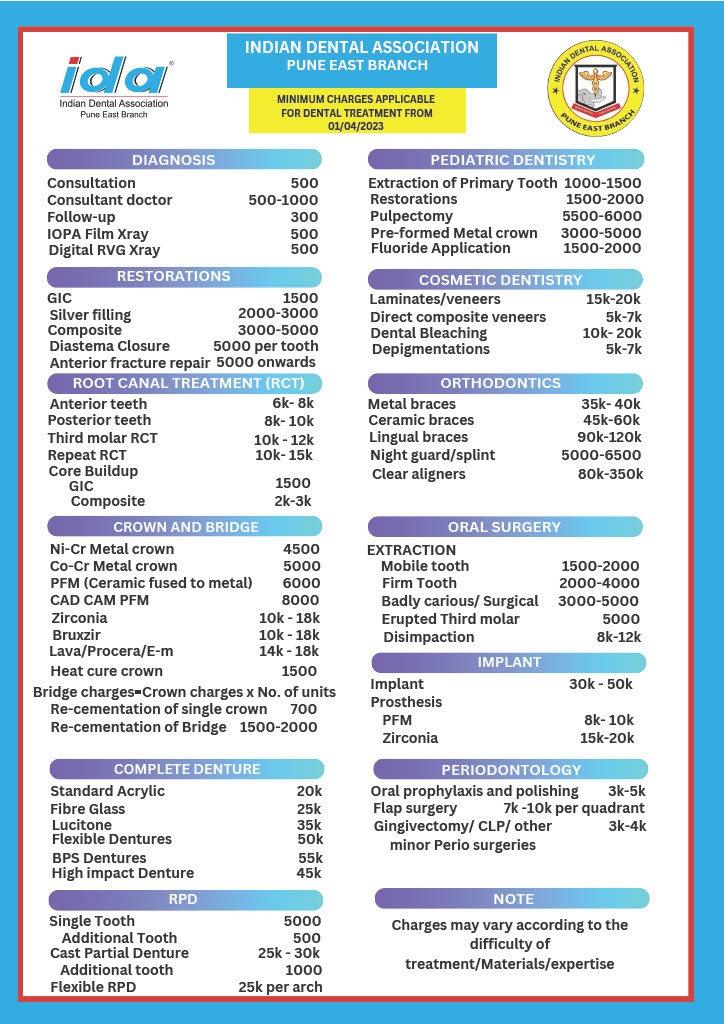
Our current published fee is ₹40,000 for a Valplast (flexible) removable partial denture and ₹80,000 for a complete denture, both listed in our online store. Other partial designs are quoted after examination. The final cost is confirmed after your dentist has examined you and written up a plan, which will also show any extractions, fillings or gum treatment needed first. Denture cases are planned with our MDS Prosthodontics department, and our dentures treatment page explains more about each type.
Kharadi runs late. Reception will tell you honestly whether you need an appointment yet.
Book — Rs 500 ☎ 8484990678