Comprehensive Examination: The dentist evaluates the patient's oral health using advanced 3D imaging (CBCT scans) and diagnostic models to assess bone density and nerve pathways.
Treatment Planning: A surgical plan is devised based on the jawbone condition and the exact required angle of the implant.
Medical History Review: The patient’s medical history is rigorously reviewed to ensure they are fit for minor surgery, as conditions like uncontrolled diabetes or heavy smoking can compromise healing.
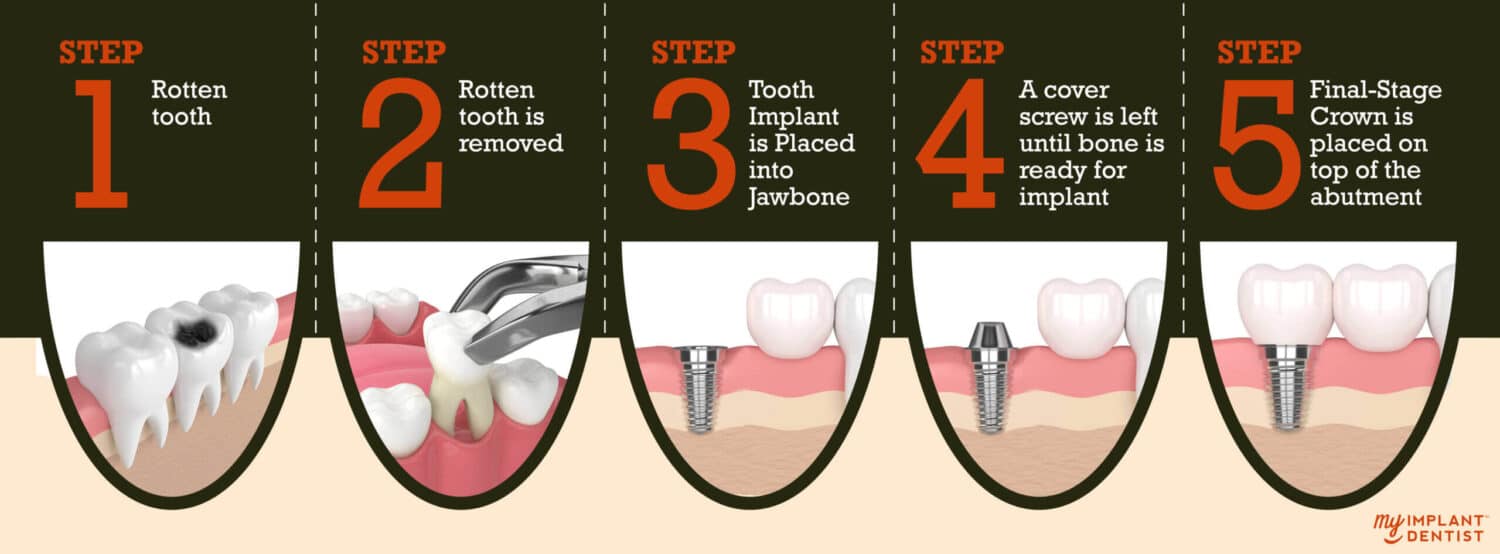
If the patient still has a damaged or severely decayed tooth in the target area, it must be carefully extracted. Depending on the bone volume, the implant may be placed immediately after extraction, or the site may require a healing period of several weeks before the implant can be inserted.
If the 3D scans reveal there is insufficient jawbone density or volume to securely anchor the titanium implant, a bone grafting procedure is required to build up the site. After a graft is placed, the patient typically needs several months of healing to allow the new bone to integrate fully before the implant surgery can proceed.
Anesthesia: Local anesthesia (and sometimes sedation) is administered to ensure total comfort.
Incision: A small incision is made in the gum to expose the jawbone.
Drilling & Insertion: A highly precise sequence of drills prepares the bone, and the titanium post (the implant body) is securely threaded into place.
Stitching: The gum tissue is usually sutured closed over the implant to protect it as the healing phase begins.
This is the most critical phase. Over a period of 3 to 6 months, the jawbone naturally grows into and physically fuses with the microscopic threads of the titanium implant in a process called osseointegration. During this period, a temporary cosmetic crown or flipper may be provided to preserve your smile's aesthetics.
Once the implant is fully fused to the bone, a minor procedure is performed to attach a small connector piece called an "abutment" to the top of the implant. The abutment sits just above the gumline and serves as the mounting base for the final crown. The gums are allowed to heal around the abutment for a couple of weeks.
Impression: After the gums heal, precise impressions of the abutment and surrounding teeth are taken.
Fabrication: A dental laboratory creates a custom prosthetic tooth (usually Zirconia or Ceramic) designed to flawlessly match your natural teeth.
Placement: The new crown is permanently cemented or screwed onto the abutment, fully restoring your bite and smile.
Although the implant itself cannot get cavities, the surrounding gums and bone can still suffer from infection (Peri-implantitis) if not cared for. Excellent daily oral hygiene—including thorough brushing and flossing—combined with routine 6-month professional dental cleanings, is absolutely essential for the lifelong success of the implant.