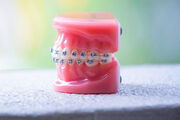
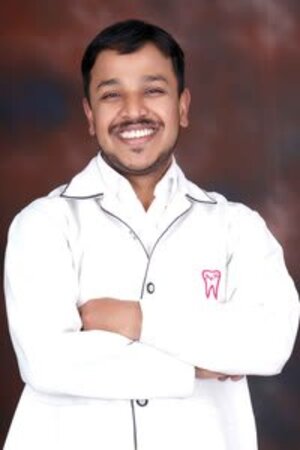
MDS Orthodontist adjusting clear aligners at Kharadi Branch

Department of Orthodontics & Dentofacial Orthopedics

Welcome to the master clinical directory of Orthodontics at AR 32 Signature Smiles Executive Poly Dental Care Centre (Branch 3), located in the heart of Pune's IT corridor in Kharadi. Orthodontics is the specialized dental science dedicated to diagnosing, preventing, and correcting malpositioned teeth and misaligned jaw patterns.

Whether you are a busy corporate professional at Eon IT Park or WTC seeking discreet Clear Aligners, or a parent looking for traditional braces for your teenager, our consulting MDS Orthodontists specialize in safely shifting teeth using advanced biomechanics to deliver a perfectly balanced, confident smile.

The Biomechanics of a Perfect Smile: How Teeth Move

Many patients believe teeth are rigidly locked into the jawbone. Clinically, teeth are actually suspended in the bone by a dynamic hammock of tissue called the periodontal ligament. When an MDS Orthodontist applies continuous, highly calibrated light pressure to a tooth (via braces or aligners), it triggers a remarkable biological process.

On the side where the pressure is applied, specialized cells called Osteoclasts gently dissolve the bone to make room. On the opposite side, cells called Osteoblasts rapidly build new bone to fill the gap and secure the tooth in its new, corrected position. This cellular remodeling is why orthodontic treatment is a slow, methodical science rather than a quick fix.

Scope of Specialized Orthodontic Care

Our consulting postgraduate panel delivers a multi-tiered approach, offering tailored solutions for children, teenagers, and adult professionals.

1. Interceptive Orthodontics (Phase 1)

  • Early Intervention: Treatment starting between ages 7–10 to guide proper jaw growth, correct severe crossbites, and create adequate space for incoming permanent teeth before they become impacted.
  • Myofunctional Appliances: Devices used to break harmful oral habits like chronic thumb sucking or tongue thrusting that physically deform the developing jawbone.

2. Traditional & Advanced Braces

  • Metallic Braces: The gold standard for complex malocclusions. High-grade stainless steel brackets offering maximum control over root angulation.
  • Self-Ligating Braces: Advanced friction-free brackets (like Damon braces) that do not require elastic ties. They offer faster tooth movement, fewer clinical visits, and easier oral hygiene.

3. Aesthetic & Invisible Orthodontics

  • Ceramic (Tooth-Colored) Braces: Translucent brackets that blend naturally with the tooth enamel, offering a highly discreet option for older teens and adults.
  • Clear Aligner Therapy: A series of custom-made, invisible, and removable BPA-free plastic trays that sequentially shift teeth without the need for any wires or metal brackets.

4. Surgical Orthodontics

  • Orthognathic Surgery Coordination: In cases of severe skeletal discrepancies (where the upper and lower jaws are drastically mismatched in size), our orthodontists work alongside oral surgeons to surgically realign the jaws in conjunction with braces.

Advanced Orthodontic Technology (2025–2026 Standards)

Our Kharadi HQ is equipped with state-of-the-art digital infrastructure, replacing messy traditional impressions with precision digital workflows.

3D Intraoral Scanning

Digital Impressions: We utilize advanced intraoral scanners to capture thousands of high-definition 3D images of your teeth per second. This eliminates the need for uncomfortable, gag-inducing putty impressions and ensures absolute precision for Clear Aligner fabrication.

AI Treatment Simulation

Outcome Visualizer: Before you even start treatment, our specialized software uses artificial intelligence to calculate tooth movements and generate a 3D animated simulation of exactly how your final, straightened smile will look.

Digital Cephalometrics

Orthodontic Tracing: Specialized 2D and 3D radiographic analysis that allows the orthodontist to mathematically calculate exact skeletal jaw angles and facial proportions to design a biologically stable treatment plan.

Clinical Success Ratios: Specialist Efficacy

MDS Orthodontists do not just straighten teeth; they align the entire stomatognathic system. Proper alignment prevents jaw joint disorders (TMJ) and ensures long-term stability.

Treatment Category Success Rate (MDS Orthodontist) Key Clinical Research Findings
Clear Aligner Compliance 95% (In Adult Patients) Clinical studies show that clear aligners have highly predictable outcomes in mild-to-moderate crowding, provided the patient strictly adheres to the 22-hour-per-day wear protocol.
Early Interceptive Treatment 88% – 92% Phase 1 treatment during the ages of 7 to 9 significantly reduces the need for permanent tooth extractions or jaw surgeries later in life by modifying active bone growth.
Long-Term Retention High Stability Relapse (teeth shifting back) is minimal when specialist-prescribed retention protocols (fixed lingual retainers combined with removable Essix retainers) are strictly followed for the first 12 months post-treatment.

Meet Our Clinical Care Directors

Dr. Avinash Bamane - Clinical Director

Dr. Avinash Bamane & Dr. Rashmi Bamane

Clinical Directors & Treatment Coordinators


At AR 32 Signature Smiles, Dr. Avinash and Dr. Rashmi Bamane act as the central diagnostic architects for your smile. Recognizing that orthodontic treatment is a long-term commitment, they ensure that every patient is seamlessly paired with our visiting MDS Orthodontic panel.

Prior to any orthodontic work, Dr. Bamane ensures your mouth is in perfect clinical health—clearing any decay or gum inflammation. Throughout the 12 to 18-month orthodontic journey, they closely monitor your progress alongside the specialist at our Kharadi HQ, providing a continuous, trusted umbrella of care for you and your family.

The Orthodontic Adjustment Roadmap

Moving teeth is a biological process. Here is what to expect during the initial phases of your orthodontic journey.

Days 1–3: The Initial Shift

Pressure Sensation: As the wires or aligners begin to apply active force, your teeth will feel tender, especially when biting down. This is the normal biological remodeling of the bone.

Soft Diet: Stick to soft foods (smoothies, mashed potatoes, soups) to minimize chewing pressure on the tender teeth.

First 2 Weeks: Tissue Adaptation

Cheek Friction: The soft tissues of your lips and cheeks may feel slightly irritated as they rub against new metal or ceramic brackets. We provide orthodontic relief wax to cover any sharp spots while the tissues toughen up.

Speech Adjustment: If you are wearing Clear Aligners, you may notice a slight lisp for the first few days as your tongue adapts to the plastic thickness.

Long-Term: The Retention Phase

Crucial Step: The day your braces come off is not the end of treatment. Teeth have "elastic memory" and will try to shift back to their original crooked positions.

Retainers: Strict compliance with wearing your prescribed retainers (either a fixed wire behind the teeth or clear removable trays) is mandatory to permanently lock in your new smile.

Transparent Orthodontic Packages

Completely pre-fixed, transparent value packages with flexible EMI options for our Kharadi corporate community.

Traditional Metal Braces

High-grade stainless steel brackets. The most durable and cost-effective solution for complex bite corrections and severe crowding.

Rs. 35,000

Aesthetic Ceramic Braces

Translucent, tooth-colored brackets that blend naturally with your smile. Highly popular among working adults seeking discreet correction.

Rs. 45,000

Clear Aligner Therapy

Virtually invisible, removable plastic aligners based on 3D AI simulations. The ultimate aesthetic choice. (Starting price, varies by complexity).

Rs. 85,000+

Clinical Guide: Understanding Orthodontics

Am I too old to get braces?

Absolutely not! Healthy teeth can be moved at any age. In fact, nearly 30% of all orthodontic patients today are adults. With the advent of highly discreet options like Ceramic Braces and Clear Aligners, corporate professionals can confidently align their teeth without the "metal mouth" look.

Clear Aligners vs. Traditional Braces: Which is better?

Neither is objectively "better"—it depends entirely on your specific clinical case and lifestyle. Traditional braces are permanently affixed, meaning they are working 24/7 and are highly effective for severe bite issues. Clear aligners offer superior aesthetics and the convenience of being removable for eating and brushing, but they require strict patient discipline (they must be worn 22 hours a day) and are generally best suited for mild to moderate crowding.

Do braces hurt?

The process of placing the brackets onto the teeth is completely painless and requires no injections or drilling. However, you will experience a dull ache or tenderness for 2 to 4 days after the wires are activated or tightened. This is simply the biological sensation of your teeth beginning to shift through the bone, which can be easily managed with over-the-counter pain relievers.

Biomechanics of Orthodontic Tooth Movement and Interceptive Protocols

| Published:

Abstract: A clinical overview establishing the principles of osteoclastic and osteoblastic cellular remodeling during prolonged, controlled orthodontic forces. Early intervention by MDS Orthodontists in the mixed dentition phase (Phase I therapy) significantly mitigates severe skeletal discrepancies, reducing the necessity for orthognathic surgeries and extensive fixed mechanotherapy in adulthood. Modern clear aligner therapy demonstrates high clinical efficacy in mild to moderate malocclusions dependent on strict patient compliance.

Orthodontics & Dentofacial Orthopedics