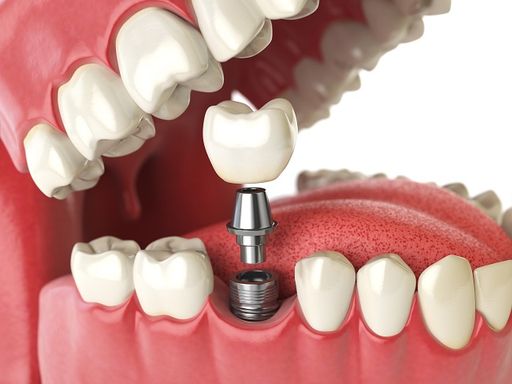
Dental implants are artificial tooth roots made of biocompatible materials like titanium, designed to support replacement teeth. They are a long-term solution for missing teeth, providing a sturdy foundation for fixed or removable prosthetic teeth that are made to match natural teeth. Implants are surgically placed into the jawbone, where they fuse over time through a process called osseointegration, ensuring stability.
The implant itself acts as a replacement for the root of a tooth. Once the implant is placed in the jawbone, it bonds with the bone to create a stable base for supporting crowns, bridges, or dentures. This fusion is crucial for the stability of the implant, as it mimics the natural support that roots provide for teeth. Dental implants help prevent bone loss in the jaw, which often occurs after losing a tooth.
For a patient to be a candidate for dental implants, certain conditions must be met. Adequate bone density and volume in the jaw are essential to support the implant. Healthy gum tissue and the absence of untreated periodontal disease are also necessary. A thorough assessment, including X-rays and 3D imaging, helps determine if the patient has enough bone structure or needs additional procedures like bone grafting. Overall health is another key factor, as conditions like uncontrolled diabetes or smoking may affect healing.
The dental implant process usually consists of multiple steps. First, a detailed evaluation and treatment planning phase involves imaging and diagnosis. Then, during the surgical phase, the dentist places the titanium implant into the jawbone. Over the next few months, osseointegration takes place. After healing, an abutment is attached to the implant, which acts as a connector. Finally, a custom-made crown, bridge, or denture is attached to the abutment.
Dental implants have a high success rate, often cited between 95% to 98%, depending on the location of the implant and the patient’s overall health. The success of the procedure relies heavily on factors like proper implant placement, quality of materials, and post-operative care.
Although dental implants are highly successful, there are factors that can lead to failure. Poor osseointegration, which occurs when the implant does not properly bond with the jawbone, can be a primary reason. This could result from insufficient bone quality, infection, or excessive pressure on the implant during healing. Smoking, uncontrolled diabetes, or bruxism (teeth grinding) may also contribute to complications.